
Living in Chalkidiki – Complete Lifestyle Guide
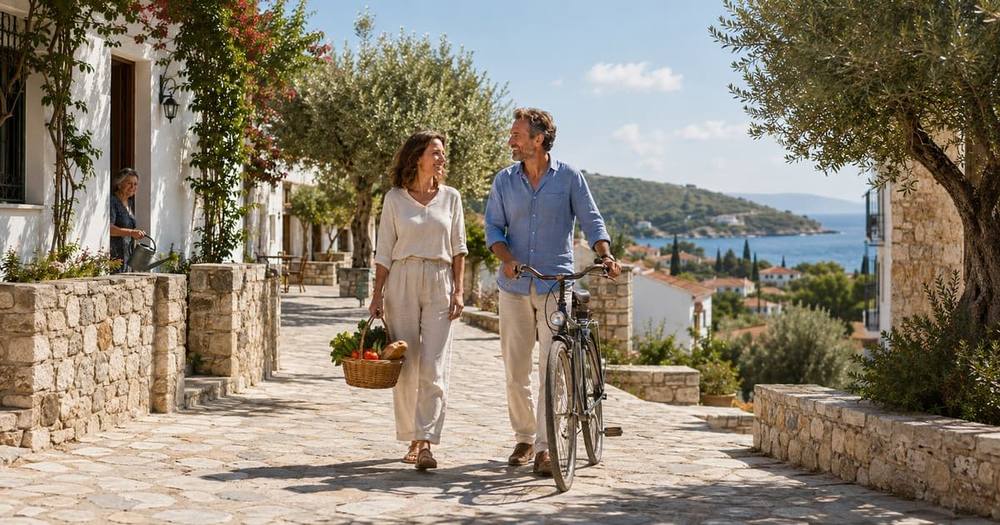
Living in Chalkidiki means experiencing one of Greece’s most beautiful regions beyond the summer holiday season. The beaches and clear water are an important part of life, but permanent and part-year residents also discover traditional villages, olive groves, forests, local markets, family businesses, cultural events, winter storms, quiet mornings, and a community rhythm that is very different from a short vacation.
Located in Central Macedonia close to Thessaloniki, Chalkidiki combines three famous peninsulas with a substantial inland area. Kassandra offers established resorts, services, and a strong rental market. Sithonia is known for pine-covered landscapes, coves, and a more natural atmosphere. Central and western Chalkidiki connect year-round towns, agriculture, administration, and routes toward Thessaloniki, while the eastern region includes historic villages and the Mount Athos area.
For international property buyers, the variety is both an advantage and a challenge. A beachfront apartment, traditional village house, new-build villa, renovation project, and isolated hillside home can all provide completely different lifestyles even when they appear close on a map. Choosing the right property requires an understanding of winter services, access, healthcare, internet, maintenance, rental demand, and the real journey to the airport or city.
This comprehensive guide explains what living in Chalkidiki is really like for homeowners, families, retirees, remote professionals, investors, and seasonal residents. It covers the regions, climate, infrastructure, property market, daily costs, transport, healthcare, schools, renovation, utilities, rental opportunities, and year-round property management.
Chalkidiki Real Estate helps international clients connect property search with the complete ownership journey. We arrange viewings, coordinate buyer professionals, organize renovations and technical services, transfer utilities, install internet and smart-home solutions, prepare properties for use or rental, and provide ongoing management. Where legal, tax, immigration, accounting, engineering, insurance, or other regulated advice is required, we connect clients with appropriately qualified professionals.

Are you considering living in Chalkidiki, buying a holiday or permanent home, retiring here or investing in local property? Contact me directly by phone, WhatsApp or email.
- Mobile: +30 693 470 9163
- WhatsApp: +30 693 470 9163
- Email: hb@chalkidikirealestate.com
- Location: Chalkidiki Real Estate
- LinkedIn: Hans-Jürgen Bahner – Over 17k Followers
- Bestselling Author: Find My Books Here
Personal property and relocation support based on local experience in Chalkidiki and northern Greece.
On this page
Select a topic to learn more about everyday life, property ownership, and relocating to Chalkidiki.
Why Live in Chalkidiki?
Chalkidiki offers an unusual combination: access to beautiful coastline without living on an island, proximity to a major European city, and enough regional variety to support very different lifestyles. Residents can spend the morning at the sea, shop in a year-round town, and reach Thessaloniki for specialist services or international travel without depending on a ferry.
The natural environment is a major advantage. Beaches, forests, hills, olive groves, walking routes, and small harbors create opportunities for swimming, boating, hiking, cycling, fishing, gardening, and outdoor dining. The shoulder seasons can be especially attractive because the weather is often suitable for activity while the most crowded holiday period has passed.
Property buyers can choose between apartments, village houses, detached homes, holiday complexes, modern villas, land, and renovation projects. Some locations are designed around summer tourism, while others function as permanent communities. This makes Chalkidiki suitable for private residence, retirement, seasonal use, remote work, and carefully managed rental investment.
The region also demands realism. Public transport is less comprehensive than in a city, healthcare may require travel, winter can feel quiet, and coastal properties need maintenance. Living well here depends on matching the location and property to your actual needs rather than buying only for the view.
Understanding the Regions of Chalkidiki
The official tourism organization describes Chalkidiki as a mainland region and peninsula resembling a hand with three fingers. Administratively, it includes the municipalities of Nea Propontida, Polygyros, Kassandra, Sithonia, and Aristotle. Each area has distinct geography, settlement patterns, tourism intensity, and year-round infrastructure.
Kassandra, the western peninsula, is the most developed for tourism. Sithonia, the central peninsula, is greener and more dispersed, with dramatic coves and pine landscapes. The eastern peninsula contains the Mount Athos monastic state, where access is restricted, while the wider Aristotle area includes villages, coast, mountains, and historic sites outside the monastic territory.
Central Chalkidiki includes Polygyros, the regional capital, and inland villages connected to agriculture, administration, and everyday services. Western entry areas such as Nea Kallikratia and Nea Moudania provide practical access toward Thessaloniki and can feel more connected to year-round commerce than remote resort locations.
Property searches should therefore begin with region and lifestyle, not a list of houses. Distance on a map can be misleading because summer traffic, road type, village access, and peninsula geography influence journey time. A local viewing plan should compare areas as well as individual properties.
Living in Kassandra
Kassandra is the western and most developed peninsula. Towns and villages such as Kallithea, Pefkochori, Hanioti, Polychrono, Afitos, Nea Fokea, Kassandria, Fourka, and Paliouri offer different combinations of beaches, restaurants, nightlife, traditional architecture, residential neighborhoods, and tourism.
The main advantage is convenience. Many locations have strong summer services, established rental demand, supermarkets, restaurants, tradespeople, beach facilities, and a large selection of property. Access from Thessaloniki is generally more direct than to distant parts of Sithonia, although traffic can become heavy during peak weekends and holidays.
Kassandra is not one uniform market. Kallithea is active and commercial; Afitos has a distinctive traditional character and elevated setting; Hanioti and Pefkochori are established resort communities; quieter inland or southern locations provide more privacy. Kassandria plays an important year-round role as an inland administrative and service center.
Residents should investigate winter life at the exact location. A lively summer street can become very quiet, and some buildings are designed mainly for holiday occupation. Heating, moisture, parking, noise, and year-round shops need direct assessment. Buyers seeking rental performance should balance guest appeal with management access and maintenance.
Living in Sithonia
Sithonia is known for its pine-covered landscape, long coastline, turquoise coves, and more natural atmosphere. Nikiti, Neos Marmaras, Sarti, Vourvourou, Toroni, Metamorfosi, Agios Nikolaos, and surrounding villages each offer a different relationship between permanent life and seasonal tourism.
Nikiti has grown into an important year-round center with shops, services, older village character, coastal development, and access to both sides of the peninsula. Neos Marmaras combines harbor life, tourism, and a larger settlement. Sarti and southern areas offer striking scenery but involve longer journeys to Thessaloniki and may have stronger seasonal rhythms.
Sithonia attracts buyers seeking privacy, views, larger plots, boating, and nature. These qualities can come with practical trade-offs: more driving, less dense infrastructure, challenging access, stronger exposure, private water or wastewater arrangements, and higher garden maintenance. Internet and utility availability should be checked at the exact property.
Rental potential can be strong in attractive coastal locations, but the operating season, access, guest expectations, and service network matter. A beautiful isolated villa requires reliable cleaning, linen, pool, garden, check-in, and emergency support. The property must work operationally, not only visually.
Living in Central and Western Chalkidiki
Central and western Chalkidiki are often overlooked by buyers focused exclusively on the peninsulas. Yet these areas can offer a more practical base for permanent living. Polygyros, the regional capital, sits on the slopes of Mount Cholomontas and provides administration, schools, healthcare, shops, and year-round community life.
Nea Moudania is a major commercial and transport center near the western entrance to the region. Its shops, services, market, coastal setting, and connection toward Thessaloniki make it relevant to families, workers, and retirees who want year-round convenience. Nea Kallikratia provides another coastal option closer to Thessaloniki.
Gerakini, Psakoudia, Olynthos, Ormylia, and surrounding areas connect central routes with beaches, agriculture, and access toward Sithonia. Inland villages can offer traditional character, lower tourism intensity, and more space, but buyers should assess heating, renovation, transport, and local services.
These areas may suit people who prioritize daily function, larger plots, city access, or year-round community over being directly inside a famous resort. They can also provide strategic property-management access to both Kassandra and Sithonia.
Eastern Chalkidiki and the Aristotle Area
Eastern Chalkidiki includes mountain villages, mining history, forests, coastal settlements, and the wider Mount Athos gateway area. Arnaia, Ierissos, Olympiada, Ouranoupoli, Stratoni, and Stagira offer very different environments from the busy western resorts.
Arnaia is known for traditional architecture and mountain character. Ierissos functions as a substantial coastal town, while Ouranoupoli is connected to Mount Athos tourism and sea travel. Olympiada combines coast, history, and access to ancient Stagira. The area can appeal to buyers seeking authenticity, nature, and a quieter pace.
Travel to Thessaloniki and other parts of Chalkidiki can take longer, so healthcare, airport access, work, and family visits should be evaluated realistically. Mountain roads and winter conditions may matter more than in low coastal zones.
Access to the autonomous Mount Athos monastic state is subject to special restrictions and permits; it should not be confused with normal public access elsewhere in the municipality. Buyers should understand the exact location, planning context, and infrastructure of any property in the wider eastern region.
Seasons and Climate in Chalkidiki
Summer is hot, bright, and active. Coastal breezes can improve comfort, but properties with poor shading, large west-facing glass, or inadequate cooling may overheat. Water use, pool systems, irrigation, traffic, and noise increase during peak occupancy. Good summer living depends on shade, ventilation, efficient cooling, and practical outdoor space.
Spring and autumn are often ideal for permanent residents. Temperatures support walking, gardening, maintenance, and quieter beach use. These seasons are also important for preparing properties: air-conditioning service, garden work, waterproofing, drainage cleaning, and winter checks should be completed before extreme demand or rain.
Winter is mild compared with northern Europe but not universally warm. Inland and elevated areas can be significantly colder than the coast. Rain, wind, humidity, and occasional cold periods make heating, insulation, ventilation, and waterproofing essential. Stone and concrete homes can feel cold when designed only for summer.
Climate varies within the region. Elevation, orientation, wind exposure, vegetation, and distance from the sea influence comfort. A property inspection should consider winter sun, drainage, moisture, roof condition, window performance, and heating—not only summer cooling.
Year-Round Life Compared with the Summer Season
Chalkidiki changes dramatically with the seasons. Summer brings visitors, restaurants, beach bars, events, seasonal workers, traffic, and extended opening hours. Winter reveals the permanent population, local routines, schools, agriculture, construction, and the businesses that residents rely on.
For some people, winter calm is the main attraction. Beaches are empty, villages feel personal, and travel is easier. Others experience the reduced choice as isolation. The right response depends on social needs, work, language, mobility, and the exact settlement.
Before buying for full-time living, spend meaningful time outside summer. Check which supermarkets, pharmacies, restaurants, gyms, cafes, trades, and transport services remain active. Ask permanent neighbors rather than assuming that online opening hours are accurate all year.
Property systems also behave differently. Summer tests cooling, water supply, and outdoor operation; winter tests heating, moisture, roof, drainage, and power reliability. A full year is needed to understand a home completely.
Access to Thessaloniki and the Airport
Proximity to Thessaloniki is one of Chalkidiki’s greatest advantages. Thessaloniki provides international airport connections, major hospitals, universities, specialist shops, government services, culture, and business. Residents can enjoy coastal life without being separated from a large city by ferry.
Thessaloniki Airport is the main gateway. Journey time depends heavily on location, season, traffic, and road conditions. Western and northern entry areas are generally quicker to reach than southern Sithonia or the eastern peninsula. Buyers who travel frequently should drive the airport route before choosing a property.
The airport has public transport connections to Thessaloniki transfer points, while KTEL Chalkidikis operates regional coach routes. Schedules and connections change by route and season, so current travel should be checked directly. Public transport is useful, but it does not provide city-style coverage to every property.
Airport proximity has two sides. It supports personal travel and holiday-rental demand, but frequent summer arrivals increase road pressure. Properties used by guests need clear directions, parking, late-arrival procedures, and reliable check-in management.
Transport and Driving in Chalkidiki
A car is the most practical form of transport for many residents. It provides access to beaches, supermarkets, doctors, schools, tradespeople, and properties outside village centers. Road quality and parking vary, and summer congestion can be significant on main routes and resort streets.
KTEL Chalkidikis connects Thessaloniki with towns and villages, with current timetables available through the operator. Buses can work well for planned journeys but may be less suitable for daily life in remote locations, especially with children, shopping, medical appointments, or irregular work.
Choose a property with transport in mind. A steep driveway, narrow village lane, unpaved final section, or limited parking may be manageable in summer but difficult with deliveries, rain, mobility issues, or guest vehicles. Emergency and maintenance access also matters.
EU and non-EU driving-licence, vehicle-registration, customs, and insurance rules differ. People relocating permanently should confirm current requirements with the relevant authority or specialist rather than assuming that foreign registration can continue indefinitely.
Healthcare, Doctors and Pharmacies
Healthcare planning should influence location. Chalkidiki has local doctors, pharmacies, health centers, diagnostic services, and the General Hospital in Polygyros, while Thessaloniki provides broader specialist and private options. The appropriate route depends on urgency, specialty, insurance, and where you live.
Year-round towns generally offer better access than small seasonal settlements. Retirees and families should identify the nearest pharmacy, primary care, laboratory, dentist, pediatric support, ambulance route, and hospital. A thirty-minute drive can become longer during summer traffic.
Public healthcare eligibility, AMKA, S1 arrangements, private insurance, and residence status are separate issues. International residents should confirm coverage before moving and not rely on a tourist EHIC or travel policy as a permanent solution.
Keep medical summaries and medication information accessible. Learning basic Greek health vocabulary is valuable, even when doctors speak English. In an emergency, exact location information is essential for remote villas; property managers should maintain clear address and access instructions.
Families, Schools and Childcare
Families can enjoy outdoor space, beaches, sports, village community, and a slower environment, but school and work logistics should lead the location decision. Public schools are distributed across municipalities, while international and broader private options are concentrated around Thessaloniki.
Contact schools directly about enrollment, language support, records, transport, and current requirements. Birth certificates, previous reports, health information, residence evidence, and translations may be needed. Children may adapt quickly to Greek, but structured support makes transition easier.
Daily journeys matter. A remote villa can require substantial driving for school, activities, friends, and healthcare. A town property may provide greater independence for older children. Test the school route during normal traffic.
Seasonal communities can change peer networks between summer and winter. Families should seek year-round sports clubs, music, tutoring, and community activities. Thessaloniki remains relevant for specialized education and entertainment.
Working and Running a Business in Chalkidiki
Tourism, construction, property services, agriculture, food, retail, hospitality, and marine activities shape much of the local economy. Seasonality creates opportunity but also irregular demand. A business that performs strongly in July may need a different model for winter.
EU citizens and non-EU citizens have different work and residence conditions. Company formation, self-employment, tax, VAT, payroll, licensing, social insurance, and professional recognition require advice from qualified accountants and lawyers. A property purchase does not authorize work.
Local business depends on relationships and reliability. Greek language, year-round presence, fair payment, and understanding seasonal cash flow can matter as much as marketing. International owners may create demand for property management, renovation, digital services, and high-quality customer support.
Before starting, test the market beyond summer and calculate full compliance and staffing costs. Distinguish a lifestyle business from an investment expected to produce predictable returns.
Remote Work and Digital Connectivity
Remote work makes living in Chalkidiki possible for more professionals, but connectivity must be verified at the exact address. Fiber availability, fixed wireless, mobile coverage, and provider capacity vary. A signal visible on a coverage map may not perform inside a stone villa or during peak demand.
Starlink can be an important option where the property has suitable sky view, mounting, power, cable routing, and secure network setup. It may also serve as a backup. Installation should consider wind, roof waterproofing, maintenance access, and aesthetics.
A reliable home office requires more than download speed. Cooling, heating, lighting, acoustics, desk ergonomics, power protection, router placement, and a second connection matter. An uninterruptible power supply can protect calls and equipment during short outages.
Remote work can have tax, employment, immigration, social-security, and employer consequences. The fact that income is paid abroad does not mean work performed from Greece is outside Greek rules. Obtain professional cross-border advice.
Shopping and Everyday Services
Major towns provide supermarkets, pharmacies, banks, hardware, household goods, trades, and weekly markets. Smaller villages may have excellent local shops but limited winter hours. Many residents combine local shopping with periodic trips to Nea Moudania, Polygyros, or Thessaloniki.
Fresh produce, bread, fish, meat, cheese, olives, honey, and wine are important parts of regional life. Weekly markets can provide good value and direct contact with producers. Imported brands and specialist products may cost more or require city shopping.
Online delivery has improved but is not equally convenient everywhere. Confirm whether couriers reach the exact address and how packages are identified when streets lack clear numbering. Large furniture and appliance deliveries require access planning.
Tradespeople become busy before and during summer. Preventive maintenance should be booked early. A trusted local coordinator helps when language, access, or owner absence makes appointments difficult.
Food, Culture and Community Life
Food in Chalkidiki reflects sea, agriculture, and village traditions. Olive oil, olives, honey, wine, vegetables, fish, seafood, meat, cheese, and preserved products connect daily eating with regional production. Restaurants range from simple tavernas to modern beach dining.
Community life includes religious festivals, local celebrations, markets, cultural programs, sports, music, and family gatherings. Polygyros and municipalities organize events, especially in summer, while traditional villages maintain their own rhythms.
Permanent residents gain more from participation than observation. Supporting local businesses, attending events, learning names, and respecting local customs creates relationships that make administration and daily life easier without treating personal connections as shortcuts around formal rules.
Winter is the best test of belonging. The community is smaller, conversations are less transactional, and routines become visible. People who enjoy this quieter period often build a deeper connection to Chalkidiki.
Language and Integration
English is common in tourism and many professional settings, but Greek language improves independence. It helps with neighbors, doctors, schools, tradespeople, deliveries, emergencies, and government offices. Even basic vocabulary demonstrates respect and opens social opportunities.
Take regular lessons rather than relying only on apps. Practice at markets, cafes, and local businesses. Keep essential documents translated by authorized professionals when required; conversational ability does not replace certified translation.
Integration also means understanding quiet hours, waste systems, water use, fire prevention, parking, shared access, pets, and neighborhood expectations. Coastal communities face summer pressure, and responsible residents protect the environment they came to enjoy.
International networks are useful, but an exclusively expatriate life can create dependence. A balanced local and international circle supports both comfort and genuine belonging.
Cost of Living in Chalkidiki
Cost of living depends on property, household, season, transport, healthcare, and lifestyle. Housing near famous beaches can be expensive, while inland or renovation properties may cost less. Tourist-area restaurants and services can have seasonal pricing.
Residents should budget for electricity, water, heating, cooling, internet, transport, insurance, healthcare, food, accounting, and travel to Thessaloniki. Car dependence increases fuel, insurance, tax, maintenance, and replacement costs.
Property owners add annual tax, communal expenses, repairs, garden, pool, security, cleaning, and coastal maintenance. A large villa can cost more to operate than expected even when purchased without finance.
Build a budget from current bills and quotations for the exact property. Preserve contingency for system replacement, storm damage, and periods of vacancy. Low daily food costs do not compensate for an underfunded roof or pool.
Renting a Home in Chalkidiki
Long-term rental can be challenging in high-demand tourist areas because owners may prefer short-term summer income. Availability, price, furnishing, and lease duration vary significantly. Begin early and distinguish genuine residential rental from winter-only accommodation that must be vacated for summer.
A written agreement should clarify registration, duration, deposit, utilities, maintenance, pets, furniture inventory, termination, and use. Confirm that the lease supports any residence or administrative purpose you require.
Renting is valuable before buying. It reveals winter conditions, traffic, services, neighborhood noise, heating, and whether the region suits the household. A trial in the exact area is more informative than repeated holidays.
Inspect the property carefully. Check moisture, heating, cooling, hot water, internet, windows, security, appliances, and meter readings. Photograph condition at handover and understand who arranges repairs.
Your local contact in Chalkidiki
Get in Touch with Hans-Jürgen Bahner
Are you considering living in Chalkidiki, buying a holiday or permanent home, retiring here or investing in local property? Contact me directly by phone, WhatsApp or email.
- Mobile: +30 693 470 9163
- WhatsApp: +30 693 470 9163
- Email: hb@chalkidikirealestate.com
- Location: Chalkidiki Real Estate
- LinkedIn: Hans-Jürgen Bahner – Over 17k Followers
- Bestselling Author: Find My Books Here
Personal property and relocation support based on local experience in Chalkidiki and northern Greece.
The Chalkidiki Property Market
The market includes holiday apartments, village homes, detached houses, villas, new developments, land, and commercial or rental assets. Price depends on municipality, sea distance, view, access, legal documentation, building quality, plot, pool, age, condition, and rental appeal.
Headline price per square meter is an incomplete measure. A smaller legally clear, well-insulated home near year-round services may offer better value than a larger remote property requiring structural, technical, or planning work. Outdoor areas and ancillary structures must be included in due diligence.
Supply can be fragmented. Some properties are marketed through several agents with inconsistent information, while attractive opportunities may sell through local networks. Buyers need a clear brief, verified details, and professional checks.
Rental performance should be assessed conservatively. Occupancy, rates, season length, commissions, tax, cleaning, utilities, repairs, garden, pool, and management determine net income. Past owner claims should be supported by records where available.
Choosing the Right Property for Life in Chalkidiki
Start with use. Permanent residence, retirement, family holidays, remote work, rental investment, and future resale produce different priorities. Define essential location, budget, bedrooms, accessibility, outdoor space, parking, internet, and renovation tolerance.
Evaluate the complete property: orientation, winter sun, wind, humidity, roof, drainage, windows, insulation, heating, cooling, electrical system, plumbing, wastewater, water pressure, road, boundaries, retaining walls, garden, and service access.
For remote properties, ask about wells, tanks, pumps, septic systems, private roads, shared infrastructure, and power interruption. These are not necessarily problems, but they require maintenance and clear responsibility.
Visit more than once. Compare morning and evening, summer and quieter periods, and the journey to essential services. The best property is not the most dramatic viewing; it is the one that supports the owner’s real life.
Buying Property in Chalkidiki
A typical purchase involves an AFM, independent legal representation, technical review, source-of-funds preparation, tax and notarial procedures, signing, and registration. The exact sequence depends on buyer, property, finance, and ownership structure.
The lawyer reviews title, encumbrances, claims, contract terms, and documentation within the mandate. The engineer assesses planning and technical information, declared and actual property characteristics, and relevant compliance. The notary prepares the formal deed and verifies required elements of the transaction.
Buyers should budget for current taxes, legal, technical, notarial, registration, agency, bank, translation, and setup costs. Professionals should calculate the actual transaction rather than relying on one generic online percentage.
After signing, transfer utilities, arrange insurance, record meters, secure keys, and establish maintenance immediately. If renovation is planned, protect the property and coordinate access before the owner leaves Greece.
Renovating for Year-Round Living
Many Chalkidiki homes were built mainly for summer. Year-round renovation may need to address roofing, waterproofing, insulation, windows, shading, heating, cooling, ventilation, electrical safety, plumbing, hot water, internet, and storage.
Assessment comes before finishes. Moisture may come from roof, terraces, ground levels, plumbing, condensation, or poor ventilation. Painting without diagnosis hides rather than solves the problem. Licensed professionals must handle regulated design, installation, permits, testing, and certification.
Outdoor spaces need durable materials, drainage, shade, wind resistance, irrigation, lighting, and maintenance access. Pools and large gardens should be planned around realistic year-round care and water use.
Chalkidiki Real Estate coordinates complete renovations, remodeling, building permits, electrical, plumbing, HVAC, windows, doors, gardens, smart homes, and final setup. Owners receive one local coordination point while specialist responsibility remains with qualified professionals.
Utilities, Water and Internet
Electricity and water arrangements depend on municipality, provider, meter status, and property type. Transfer can require AFM, identity, ownership or lease evidence, meter details, contact information, and payment setup. Photograph readings at handover.
Water supply and pressure can vary by location and season. Some properties use tanks, pumps, filters, wells, or private networks. Understand source, quality, storage, maintenance, and responsibility before purchase.
Internet must be checked at the exact address. Fixed-line, fiber, mobile, or satellite options may apply. Stone walls and large plots require deliberate Wi-Fi design. Remote work and security systems benefit from backup connectivity and power protection.
Administrative setup is easier with organized tax credentials, verified contact details, digital records, and local support. Keep contracts, customer numbers, manuals, and emergency contacts in the property file.
Property Maintenance and Coastal Conditions
Salt air, sunlight, wind, humidity, vegetation, storms, and vacancy affect Chalkidiki properties. Metal fittings, gates, air-conditioning units, exterior lights, paint, sealants, roofs, drains, irrigation, pools, and electronics require preventive care.
Regular inspections detect leaks, moisture, pests, electrical interruptions, blocked drainage, broken shutters, garden problems, or unauthorized access. Small faults become expensive when a holiday home remains closed for months.
Seasonal preparation includes air-conditioning service, filter cleaning, roof and drain checks, irrigation programming, pool opening or closing, storm preparation, exterior furniture, frost-sensitive systems in colder areas, and ventilation.
A maintenance log should record equipment, warranties, service dates, contractors, keys, photos, and approvals. Property management turns ownership into a planned system rather than a sequence of emergencies.
Airbnb and Holiday-Rental Investment
Chalkidiki’s tourism creates rental potential, especially for properties near attractive beaches with pools, views, parking, modern interiors, strong internet, and professional presentation. Demand and season length vary by area and property.
Income must be modeled net of tax, platform or agency fees, utilities, cleaning, laundry, guest supplies, maintenance, garden, pool, insurance, repairs, and management. High gross rates in August do not represent annual profitability.
Current registration, tax, safety, and operating requirements must be verified. Property characteristics and ownership documentation should support the intended use. Regulations can change, so qualified tax and legal advice is important.
Professional management coordinates pricing, listing, communication, check-in, checkout, cleaning, linen, inspections, maintenance, and owner use. The goal is a reliable guest experience and protected asset, not only maximum bookings.
Retiring in Chalkidiki
Chalkidiki offers climate, outdoor activity, community, food, and proximity to Thessaloniki, making it attractive for retirement. The ideal location depends on healthcare, transport, winter services, mobility, and social needs rather than beach distance alone.
Retirement-friendly homes benefit from step-free access, entrance-level bedroom and bathroom, walk-in shower, shading, efficient heating and cooling, manageable garden, secure access, and reliable maintenance. Future adaptation should be considered during renovation.
EU and non-EU residence rules, tax residence, pension taxation, S1 healthcare, AMKA, insurance, and estate planning require individual review. Our dedicated Retiring in Greece guide covers these topics in greater depth.
Part-year retirees need absence management for water, humidity, storms, garden, pool, mail, security, and utilities. A local property manager protects the home and prepares it before each arrival.
Your First Year Living in Chalkidiki
The first year is an adjustment period. Learn how the property behaves in heat, rain, wind, humidity, and vacancy. Record energy and water use, maintenance, traffic, and daily journeys. Real experience should guide later improvements.
Build a local network: doctor, pharmacy, accountant, lawyer, electrician, plumber, HVAC technician, gardener, cleaner, mechanic, and trusted neighbor. Keep contacts organized rather than searching during emergencies.
Complete applicable residence, tax, insurance, driving, and administrative procedures with qualified support. Our Moving to Greece guide provides a broader relocation checklist.
Resist making every renovation immediately. Correct safety, water, weather, and technical defects first, then live in the property before finalizing furniture or major lifestyle changes. The best long-term decisions often emerge after one full seasonal cycle.
Property Management in Chalkidiki
Property management is valuable for holiday homes, rental investments, retirees, and permanent residents who travel. It provides local access, inspections, contractor coordination, cleaning, garden and pool care, utility monitoring, and emergency response.
The management plan should reflect the property. A compact apartment may need key holding and inspections; a villa may require pool, irrigation, landscaping, security, internet, water systems, and guest operations. Responsibilities and approval thresholds should be documented.
Regular reports give owners visibility without overwhelming them with every minor task. Significant issues are explained with options, costs, and urgency. Licensed specialists remain responsible for regulated work.
Chalkidiki Real Estate can connect property management with renovation, utilities, Starlink, Airbnb, maintenance, and future resale. Knowledge stays with one long-term local partner.
Why Choose Chalkidiki Real Estate?
Chalkidiki Real Estate is more than a property-sales contact. We support the complete ownership lifecycle: search, purchase coordination, renovation, utilities, furnishing, management, rental, maintenance, and improvement.
International clients need clear communication and a trusted person on the ground. We coordinate access, local professionals, contractors, deliveries, and practical decisions while keeping the owner informed. Legal, tax, engineering, and other regulated work remains with qualified advisors.
Our local perspective helps buyers compare not only houses but lifestyles. We discuss winter services, airport access, property systems, rental operation, garden workload, and future maintenance before these become surprises.
Whether you plan to move permanently, retire, work remotely, buy a holiday home, or invest in Airbnb, we create a service plan around your property and objectives.
Frequently Asked Questions About Living in Chalkidiki
Is Chalkidiki suitable for year-round living?
Which part of Chalkidiki is best for permanent residence?
Do I need a car?
How far is Chalkidiki from Thessaloniki Airport?
Is internet reliable enough for remote work?
Are there hospitals and doctors in Chalkidiki?
Is property cheaper than in Thessaloniki?
Can foreigners buy property in Chalkidiki?
Can I rent my property through Airbnb?
What maintenance does a coastal home need?
Is Chalkidiki a good place to retire?
Can Chalkidiki Real Estate manage my property?
Useful Local and Official Resources
Timetables, opening periods, available services and local conditions can change by season. Verify important arrangements directly with the responsible provider or authority, particularly before choosing a permanent home in a smaller coastal village.
- Chamber of Chalkidiki – Regional Tourism Guide
- Municipality of Kassandra – Official Visitor Information
- Visit Central Macedonia – Halkidiki
- KTEL Chalkidiki – Bus Routes and Tickets
Practical notice: This guide describes general local conditions. Property suitability, utilities, legal status, building condition, internet performance and year-round services must be checked for the individual property and location before purchase.
Are you considering living in Chalkidiki, buying a holiday or permanent home, retiring here or investing in local property? Contact me directly by phone, WhatsApp or email.
- Mobile: +30 693 470 9163
- WhatsApp: +30 693 470 9163
- Email: hb@chalkidikirealestate.com
- Location: Chalkidiki Real Estate
- LinkedIn: Hans-Jürgen Bahner – Over 17k Followers
- Bestselling Author: Find My Books Here
Personal property and relocation support based on local experience in Chalkidiki and northern Greece.
Continue Planning Your Move to Greece
Daily life in Chalkidiki connects with residence, tax, healthcare, banking, work and household costs. Use these guides to coordinate the complete move.