
Open a Bank Account in Greece – Complete Guide
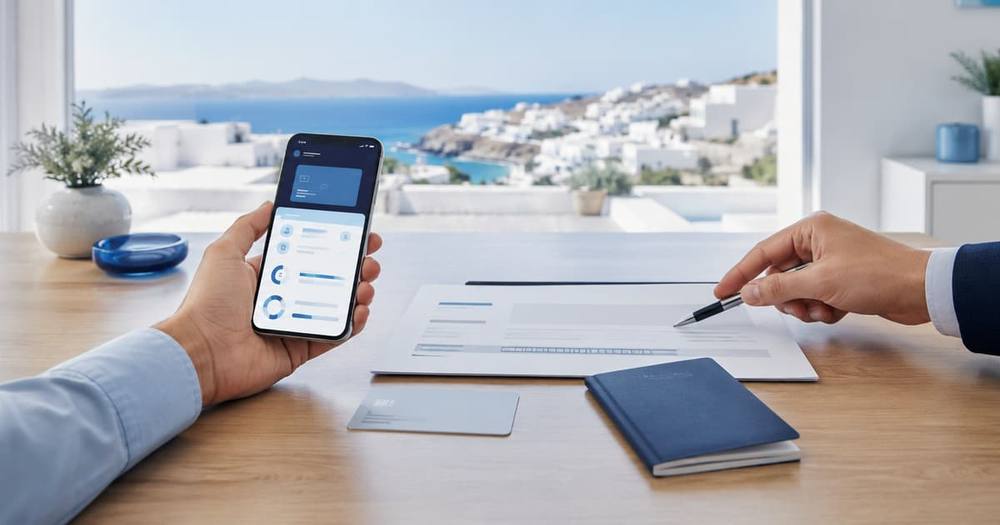
Opening a bank account in Greece is one of the most practical steps for people who buy property, relocate, retire, work, study, or spend substantial time in the country. A Greek account can simplify utility payments, property expenses, standing orders, local transfers, debit-card purchases, tax payments, rent, insurance, and the everyday administration connected with a home.
However, opening an account is not always a simple walk-in procedure for an international applicant. Greek banks must identify their customers, verify tax residence, understand occupation and income, confirm addresses and contact details, and apply anti-money-laundering and sanctions controls. The documents required depend on the applicant’s nationality, country of residence, tax status, profession, source of funds, intended account use, and the bank’s current internal policies.
This comprehensive guide explains how to open a personal bank account in Greece, which documents may be requested, how procedures differ for Greek residents and non-residents, what to expect at Eurobank or Alpha Bank, and how to prepare for a successful application. It also explains how Chalkidiki Real Estate provides paid practical assistance to clients who want support with the process.
Our paid bank-account assistance: Chalkidiki Real Estate can help prepare your documentation, review practical requirements, coordinate translations or related appointments where needed, help arrange a bank appointment, and accompany or support you during an application for a personal account at Eurobank or Alpha Bank. The service is subject to an agreed fee. We are not a bank, credit intermediary, legal adviser, tax adviser, or representative of Eurobank or Alpha Bank. The bank alone decides whether to accept an application, which documents to request, which products to offer, and how long its review will take. Payment for our assistance does not guarantee account approval.

Do you need practical support preparing to open a Greek bank account for a property purchase, relocation or everyday life in Greece? Contact me directly by phone, WhatsApp or email.
- Mobile: +30 693 470 9163
- WhatsApp: +30 693 470 9163
- Email: hb@chalkidikirealestate.com
- Location: Chalkidiki Real Estate
- LinkedIn: Hans-Jürgen Bahner – Over 17k Followers
- Bestselling Author: Find My Books Here
Personal banking-preparation and property-purchase support for international clients in Chalkidiki and throughout Greece.
On this page
Select a topic to learn about opening and using a personal Greek bank account.
Why Open a Bank Account in Greece?
A local bank account can make everyday life and property ownership substantially easier. Greek utility providers, insurers, telecommunications companies, public authorities, building managers, contractors, and service providers commonly use Greek IBANs and local payment references. Although European payment rules support cross-border euro transfers, a local account can still simplify standing orders, refunds, card delivery, identity checks, and communication with providers.
Property owners often use the account to pay electricity, water, internet, communal building expenses, insurance, maintenance, tax obligations, and local professionals. Keeping a dedicated Greek account also separates property expenditure from personal banking in another country. This makes cash flow easier to monitor and gives an accountant or owner a clearer record of transactions.
Residents may need an account for salary or pension payments, rent, debit-card use, online purchases, public payments, mobile contracts, and person-to-person transfers. A Greek debit card and e-banking application can be convenient when a merchant, automated process, or local service is designed around domestic banking.
The value of an account depends on how it will be used. Before applying, define whether the purpose is property ownership, permanent relocation, retirement, everyday spending, rent collection, or a combination. The bank may ask about the expected transactions, countries involved, anticipated incoming funds, and economic purpose of the relationship.
Is a Greek Bank Account Mandatory?
A Greek bank account is not universally mandatory simply because someone owns a property or spends time in Greece. SEPA transfers allow many euro payments from accounts in other participating countries, and some obligations can be paid through other channels. Nevertheless, practical difficulties can arise when a provider’s system expects a Greek account, when a refund must be processed locally, or when a standing order is easier to establish through a domestic bank.
A property purchase should not be planned on the assumption that a Greek account is always legally required, nor on the opposite assumption that it is unnecessary. The notary, lawyer, accountant, bank, and transaction professionals should confirm how funds, taxes, fees, and payment evidence will be handled in the particular case.
People moving permanently to Greece often find a local account highly useful even if their main income continues to arrive abroad. It can function as the operating account for Greek expenses while savings remain elsewhere. Retirees should confirm whether their pension provider can pay directly to Greece and what currency or transfer costs apply.
Opening an account early can prevent delays, but it should follow a proper document plan. A rushed application with inconsistent tax addresses, expired documents, or unclear income evidence may create more work than waiting until the file is complete.
Who Can Apply for a Personal Bank Account in Greece?
Adults who satisfy a bank’s identification, eligibility, and compliance requirements may apply for a personal account. This can include Greek residents, citizens of other EU countries, non-EU residents, expatriates, property owners, retirees, employees, self-employed people, and individuals planning to relocate. Eligibility to apply does not mean automatic approval.
Banks assess each customer under their own risk policies and legal obligations. Nationality, residence, tax jurisdictions, professional activity, source of income, sanctions exposure, politically exposed person status, and intended account activity can influence the review. Applicants connected with multiple countries or complex income may need additional documents.
Minors, people requiring guardianship arrangements, and joint-account structures follow different rules. This guide focuses on an ordinary personal account for an adult acting on their own behalf. Business activity should not be routed through a personal account merely because it is easier to open; companies and self-employed operations may require appropriate business banking and accounting treatment.
The account holder must provide accurate information and update it when circumstances change. A consultant can organize documents and appointments, but cannot replace the applicant’s personal declarations, identity verification, consent, signatures, or answers to the bank.
Greek Residents and Non-Residents
Bank procedures frequently distinguish between people permanently resident in Greece and those resident abroad. The distinction is not based only on citizenship. A German citizen living permanently in Chalkidiki may be treated differently from a Greek citizen living permanently in Germany, because address, tax residence, and economic profile are central to customer identification.
Greek residents may be able to use national digital systems such as TAXISnet, eGov-KYC, and the National Communication Registry to transfer verified data. Some fully digital onboarding routes require Greek residence, a Greek tax number, compatible identification, and updated public records. If any element is missing, a branch process may be necessary.
Non-residents generally need evidence from their country of residence. This may include a tax assessment, tax-residence certificate, employment letter, payslip, pension statement, utility bill, bank reference, or other official documentation. Requirements differ by profile and bank. Documents should be recent and clearly show the same name and address used in the application.
Do not change an address or declare Greek tax residence merely to make onboarding appear simpler. Banking information must reflect reality. Tax residence is a legal and factual matter with potentially significant consequences and should be discussed with a qualified tax adviser.
EU Citizens and Non-EU Applicants
EU citizenship can simplify residence and identification issues, but banks still carry out full customer due diligence. An EU identity card may be acceptable in some procedures, while a valid passport often provides the clearest international identification. The bank may still require Greek tax information, foreign tax details, address proof, and occupation evidence.
Non-EU applicants may need a passport plus evidence of legal residence in Greece or their country of residence. The precise requirement depends on the route and profile. A visa, residence permit, entry stamp, residence application certificate, or other document may be relevant, but applicants should never assume that one immigration document automatically meets the bank’s rules.
People with citizenship or residence in more than one jurisdiction must disclose all relevant tax residencies and taxpayer numbers. Eurobank notes that its digital route has limitations for applicants with two or more foreign residences. Other risk or technical limitations may also send an application to manual review.
Citizenship, residence permission, tax residence, and banking approval are separate concepts. Buying property or receiving a residence permit does not compel a bank to open an account. Equally, holding an account does not grant residence or tax status.
The Greek Tax Identification Number (AFM)
The Greek tax identification number, known as the AFM, is central to many property and administrative processes. Banks commonly request it when establishing a Greek customer profile, particularly for resident accounts and property-related activity. The number is issued by the Independent Authority for Public Revenue, AADE.
Obtaining an AFM is a separate process from opening a bank account. Applicants may need an identification document, registration application, contact information, and supporting documents appropriate to their status. AADE provides appointment and remote-service options for certain cases, but the current route should be confirmed before preparing documents.
An AFM does not by itself mean that a person is a Greek tax resident. The tax registry records status and details that must be accurate. Foreign residents may need a tax representative or other arrangements depending on current rules and circumstances. Obtain tax advice rather than relying on a bank employee to determine residence status.
Names, passport details, address, email, and phone number should be consistent across AADE, banking, and property documents. Even minor transliteration differences can create failed digital matching. Correcting the source registry before the bank application is often more effective than repeatedly uploading the same inconsistent documents.
Core Documents for Opening a Bank Account in Greece
Both Eurobank and Alpha Bank organize their requirements around four broad categories: identification, income and tax information, permanent residence or contact details, and occupation. The exact list can change, and a branch may request more evidence based on the customer’s profile.
| Information category | Common examples | What to check |
|---|---|---|
| Identity | Valid passport or accepted national identity card | Validity, readable copy, matching Latin spelling |
| Greek tax details | AFM issuance certificate, recent tax-registry record or Greek tax document | Correct address, residence status and contact data |
| Foreign tax details | Tax assessment, tax return, tax-residence certificate and foreign TIN | Recent document from the competent authority |
| Home address | Utility bill, tax notice, lease, public certificate or accepted bank correspondence | Applicant’s name, full address and issue date |
| Phone and email | Mobile contract or bill, confirmed email and accessible phone | Ability to receive one-time codes during onboarding |
| Occupation | Employer certificate, payslip, pension statement, self-employment registration or professional document | Current status and relationship to declared income |
| Income and funds | Tax return, payslips, pension proof, account statements, sale or inheritance documents | Clear origin, account ownership and transaction trail |
Documents should be complete pages, not cropped screenshots. A document that proves address may not prove occupation, and a bank statement may not replace a tax return. Prepare each category independently and keep originals available.
Proof of Identity
A valid passport is generally the strongest document for an international application. It should be undamaged, readable, current, and show the applicant’s full name, date of birth, nationality, document number, issue date, and expiry date. Some procedures accept EU or Greek identity cards, but compatibility differs between digital and branch onboarding.
The spelling used by the bank should match official identification. Greek records sometimes transliterate names differently, particularly where a person has multiple first names or characters not used in Greek. Resolve inconsistencies early because they can affect digital verification, tax records, property contracts, and international transfers.
The applicant must normally be personally identified. A power of attorney may support selected administrative actions, but banks can require personal presence, video identification, signatures, declarations, or original-document inspection. Never assume another person can complete the entire process.
Applicants should bring the original passport or identity card even if copies were submitted in advance. If a document is close to expiry, renewal before starting may prevent an account from requiring immediate updating.
Proof of Address, Phone Number and Contact Details
Address evidence is a common source of delay. The bank usually needs to confirm where the applicant actually lives. A recent utility, telecommunications, tax, or government document may be accepted if it shows the full name and residential address. A hotel booking or informal statement is unlikely to have the same evidential value.
Foreign documents should use an address that matches tax-residence and occupation information. If the applicant owns a Greek holiday home but remains resident abroad, the Greek property address should not automatically replace the foreign residential address. Both may be recorded for different purposes.
The mobile number must remain accessible because banks use one-time passwords and security alerts. International numbers may be accepted in some routes, but platform and product limitations can apply. The email address should be private, secure, and used only by the applicant.
Where bills are in a spouse’s or landlord’s name, additional proof may be required. A registered lease, municipal certificate, tax record, or supporting relationship document might help, but only the bank can confirm acceptance. Our preparation service can identify obvious gaps before an appointment.
Tax, Income and Occupation Evidence
A bank must understand the customer’s financial and professional profile. Employees may provide a recent payslip and employer certificate. Self-employed applicants may need business registration, tax returns, social-insurance information, invoices, or professional licences. Retirees may use pension decisions, annual statements, and tax documents.
People without current employment still need a truthful explanation of how they support themselves. Savings, investment income, spousal support, property income, inheritance, or another source may be relevant. The bank may request evidence rather than accepting a general statement.
For residents abroad, the latest foreign tax assessment or return is often important. Eurobank specifically lists proof of income and tax details, occupation, permanent residence, and identification in its international-customer onboarding information. Alpha Bank publishes the same basic categories for new accounts.
Do not edit, translate informally, or omit pages in a way that changes meaning. Where income fluctuates, provide a coherent set of documents and explain the activity. Inconsistency between declared occupation and incoming funds can lead to questions later even if the account is opened.
Source of Funds and Source of Wealth
Source of funds describes where a particular payment comes from, while source of wealth explains how the customer accumulated overall assets. Banks may examine both, especially when a large property payment, international transfer, cash deposit, investment redemption, company distribution, inheritance, or asset sale is involved.
For a property purchase, useful evidence may include bank statements showing accumulation, a sale agreement for another asset, inheritance documents, dividend decisions, loan agreements, salary history, tax returns, or investment statements. The transfer trail should connect the source account, owner, amount, and intended payment.
Sending funds through multiple unrelated accounts, unexplained third parties, or cash can complicate verification. Discuss the transfer structure with the lawyer, accountant, notary, and banks before money moves. Never split transactions to avoid controls or reporting.
Our support can help organize documents and communication, but we cannot certify the legitimacy of funds, advise on evading controls, or influence compliance decisions. The applicant is responsible for complete and truthful disclosure.
Translations, Certification and Document Format
Greek banks may accept selected documents in Greek or English, but other languages can require official translation. Requirements vary by document, origin, branch, and purpose. Ask before commissioning translations because informal translations or automated text may not satisfy the bank.
Some foreign public documents may need legalization or an apostille for related Greek administrative processes. Banking requirements are not identical to notarial, tax, immigration, or cadastral requirements. A document accepted by one institution is not automatically accepted by another.
Digital uploads should be legible, in the permitted file type and size, with all pages visible. Screenshots can omit issuer, date, address, or authentication information. File names should identify the category without exposing unnecessary sensitive details when shared.
We recommend creating a controlled checklist showing document, issuer, date, language, translation status, and the requirement it satisfies. Sensitive files should be transferred through secure agreed channels and retained only as necessary for the service.
Opening a Personal Account at Eurobank
Eurobank publishes routes for opening an account through its mobile application or by appointment at a branch. It also operates services for international customers. According to its official information, digital customer onboarding can request proof of identity, income and tax details, occupation, and home address.
The online process generally starts with the Eurobank Mobile App, verification of a mobile number, document submission or connection with eGov-KYC where available, and acceptance of the relevant terms. International applicants may upload original documents and receive an outcome by SMS. Eligibility and technical restrictions apply.
Eurobank states that a person living abroad may be able to apply digitally if permanently resident in a country participating in the relevant document-recognition framework. It also notes that applicants with two or more foreign residencies cannot use that online route. A branch application may therefore be more suitable for complex profiles.
At a branch, the bank can inspect originals, ask questions, and request additional evidence. Appointment availability, staff capacity, document language, and the particular applicant determine timing. Chalkidiki Real Estate can provide paid organizational support for a Eurobank application, but Eurobank independently evaluates and decides every case.
Opening a Personal Account at Alpha Bank
Alpha Bank publishes an online account-opening process through myAlpha Mobile for eligible new customers. The process includes confirming mobile and email, transferring verified information through gov.gr, video identification, creating e-banking credentials, and accepting account terms.
The bank’s published eligibility for this standard mobile route includes being over eighteen, permanently resident in Greece, having only a Greek tax number, and having updated information in the National Communication Registry. Applicants who do not satisfy the digital conditions may need a branch appointment and a wider document file.
Alpha Bank lists proof of identity, income and tax details, address and phone number, and occupation among the supporting-document categories. Examples include passport or identity card, a recent tax document, utility or phone bills, employer certificates, payslips, professional documents, and social-security evidence.
Alpha Bank also provides services aimed at foreign nationals and non-domiciled tax residents, but product access and acceptance remain subject to assessment. Our paid assistance can help prepare and coordinate an Alpha Bank application. We do not act for Alpha Bank and cannot override its eligibility, compliance, product, or approval decisions.
Eurobank or Alpha Bank: Which Is Better?
There is no universally better bank. The right choice depends on applicant eligibility, branch access, digital route, language support, documentation, intended transactions, product pricing, card delivery, international transfers, and personal preference. Procedures and fees can change.
Eurobank’s published international onboarding may be attractive for certain residents abroad. Alpha Bank’s mobile route can be efficient for applicants integrated with Greek digital records. A person who does not satisfy a digital pathway may still be considered through a branch, subject to bank policy.
Location matters for ongoing service. Property owners in Chalkidiki should consider the practical journey to a branch, appointment availability, cash or document needs, and what support remains available after summer. A sophisticated app does not eliminate every reason for branch contact.
Before choosing, review current account terms, monthly packages, transfer charges, card fees, withdrawal conditions, e-banking functions, support channels, and deposit-guarantee information. We can discuss the practical differences but do not provide regulated product recommendations or claim that one bank will approve a particular customer.
Online Application or Branch Appointment?
Online onboarding can be fast when identification, tax data, address, residence, and occupation fit the bank’s automated criteria. It reduces travel and can issue credentials quickly. However, document recognition, phone compatibility, public-registry mismatches, multiple tax residences, or a non-standard profile may interrupt the process.
A branch appointment allows personal explanation and original-document review. It may be preferable for non-residents, property buyers transferring significant funds, retirees with foreign pensions, self-employed applicants, or people whose names and addresses differ across records.
A branch visit does not reduce compliance. Staff may still refer the application for review and request further evidence after the meeting. Conversely, digital onboarding does not mean weaker checks; remote identification is governed by regulatory requirements.
Choose the route that fits the profile rather than the route that appears quickest. Starting an ineligible digital application repeatedly can create confusion. Our support begins by screening the practical facts and checking current bank information.
What Happens at a Greek Bank Appointment?
The applicant should arrive with original identification and the complete supporting file. The bank employee may ask about residence, tax numbers, occupation, employer or business, annual income, source of funds, expected transfers, property ownership, account purpose, and countries connected to transactions.
The employee may copy or scan documents and ask the applicant to complete tax-residence, compliance, personal-data, product, and signature forms. Questions are normal and should be answered accurately. If the applicant does not understand a document, request clarification before signing.
The bank may propose an account package, debit card, e-banking, insurance, or other services. Optional products should be distinguished from requirements. Review charges, renewal terms, cancellation, and whether a package is necessary for the intended use.
An account may be opened during the appointment, approved later, or remain pending for additional documents. Our accompaniment or coordination can reduce language and organizational difficulties, but the conversation remains between the applicant and bank, and the applicant must personally confirm all information.
After the Account Is Approved
Once approved, the customer normally receives an IBAN, account information, e-banking credentials, and a debit-card arrangement. Card delivery or collection varies by route and bank. Confirm the registered address, name spelling, mobile number, email, and preferred communication.
Activate e-banking and security only on a trusted device. Record official support numbers independently and never share passwords, PINs, complete card details, or one-time codes with consultants, agents, or callers. A legitimate support person does not need to know the customer’s secret credentials.
Before sending substantial funds, make a small test transfer and confirm the IBAN through a trusted channel. Understand transfer limits and whether they can be changed digitally or require bank approval. Property transactions may require advance notice and source-of-funds evidence.
Set up standing orders only after checking the beneficiary and payment reference. Keep enough balance for annual obligations as well as monthly bills. A separate property reserve can prevent missed payments when the owner is abroad.
Debit Card, Greek IBAN and e-Banking
A Greek IBAN identifies the account for domestic and SEPA payments. It should be copied directly from the banking application or official account document. Never rely on an IBAN received only through an unexpected email, especially during a property purchase.
Debit cards can be used for purchases, online payments, withdrawals, and digital wallets subject to settings and limits. International usage, dynamic currency conversion, replacement, and withdrawal fees should be reviewed. Keep the physical card and PIN separate.
E-banking usually supports transfers, bill payments, card controls, statements, and notifications. Greek bills often include standardized payment codes that can be entered or scanned. Some public payments can also be made through banking menus.
Secure access depends on the registered phone and device. Before changing a foreign number, losing access, or replacing a handset, confirm the bank’s update process. Owners abroad should not wait until an urgent tax or utility deadline to discover that security codes go to an inactive number.
Bank Fees, Account Packages and Transfer Costs
Account pricing can include monthly service packages, card charges, outgoing transfers, incoming non-SEPA payments, cash services, replacement cards, statements, alerts, and currency conversion. Current fee schedules should be reviewed directly because prices and bundled allowances change.
A low monthly package may be economical for frequent payments but unnecessary for light use. Compare the expected number of transfers, cards, direct debits, and international transactions. Do not choose solely on a promotional period.
Property buyers should examine large-transfer procedures and limits. A normal retail e-banking limit may not accommodate a purchase payment without advance adjustment. International correspondent-bank charges and currency conversion can affect the received amount.
Chalkidiki Real Estate’s paid assistance fee is separate from every bank fee, government charge, translation, accountant, lawyer, courier, or third-party cost. The scope and price of our service should be agreed before work begins.
Your local contact in Chalkidiki
Get in Touch with Hans-Jürgen Bahner
Do you need practical support preparing to open a Greek bank account for a property purchase, relocation or everyday life in Greece? Contact me directly by phone, WhatsApp or email.
- Mobile: +30 693 470 9163
- WhatsApp: +30 693 470 9163
- Email: hb@chalkidikirealestate.com
- Location: Chalkidiki Real Estate
- LinkedIn: Hans-Jürgen Bahner – Over 17k Followers
- Bestselling Author: Find My Books Here
Personal banking-preparation and property-purchase support for international clients in Chalkidiki and throughout Greece.
Greek Bank Accounts for Property Buyers
A local account can help organize reservation payments, transaction expenses, taxes, utility transfers, renovation invoices, and ongoing costs. It also produces a dedicated record for the property. Whether the purchase price itself should pass through the account must be planned with the transaction professionals and banks.
Large incoming transfers attract source-of-funds checks. Prepare statements and supporting evidence before the transfer. The sending account should normally be clearly linked to the buyer. Joint ownership, gifts, loans, company funds, and third-party payments require legal and tax planning.
The purchase contract, bank transfers, tax payments, and beneficial ownership should tell a consistent story. Do not transfer money based on changed email instructions without independent confirmation from the lawyer or notary.
We can connect account preparation with property search, due diligence coordination, utility registration, renovation, and management. Banking support does not replace the buyer’s lawyer, accountant, notary, or the bank’s compliance team.
Bank Accounts for Property Owners in Greece
After completion, the account can function as the property’s operating center. Electricity, water, internet, common charges, insurance, garden, pool, cleaning, maintenance, taxes, and management can be paid from one place.
Owners should create a twelve-month forecast and retain a reserve. Holiday homes often have low winter activity but high summer electricity, water, and maintenance. Annual insurance and tax payments may arrive separately from ordinary bills.
Where a property manager coordinates payments, define authority carefully. Sharing e-banking passwords is unsafe. Use invoices, approvals, standing orders, limited mandates where appropriate, and transparent reporting rather than uncontrolled credential access.
Our property management services in Chalkidiki can coordinate inspections, maintenance, utility issues, contractors, and operational support under an agreed scope.
Opening an Account When Moving to Greece
Relocating creates a sequence problem: the bank may ask for Greek tax and address records, while providers may request a bank account. Plan AFM, residence documentation, lease or property completion, phone, public-registry updates, and banking as one coordinated process.
Do not cancel the home-country account immediately. Keep it during transition for income, existing direct debits, tax refunds, and emergency access. Confirm whether the bank allows continued use after foreign relocation and update tax residence honestly.
Budget for duplicate costs during setup. Card delivery, appointment timing, translation, travel, and pending compliance can extend the period before the Greek account is fully operational. Carry lawful alternative payment methods.
Our Moving to Greece guide explains residence, housing, tax preparation, healthcare, utilities, transport, and practical relocation in more detail.
Greek Bank Accounts for Retirees
Retirees often use a Greek account for household expenses and may consider pension payments. Before redirecting a pension, confirm the provider’s rules, transfer cost, currency, payment dates, and the effect of changing account details.
Bank documentation can include pension statements, tax assessments, proof of address, identity, and tax numbers. Health or mobility limitations make branch access important when choosing a bank. Digital skills and a trusted security process should be considered.
Joint accounts and authorized-person arrangements may help with incapacity planning, but their legal, tax, inheritance, and operational effects require professional advice. Do not add a person simply for convenience without understanding their rights.
Our Retiring in Greece guide covers property, residence, healthcare, tax planning, location, and long-term lifestyle considerations.
Rental Income, Holiday Letting and Airbnb Payments
A personal property owner receiving rental income must follow Greek registration, declaration, and tax rules. The correct bank arrangement depends on ownership, operator, platform profile, management agreement, and whether the activity remains ordinary property income or becomes a business activity.
Platform payout details should match the authorized recipient and accounting records. Co-owners should obtain advice on income allocation. A manager collecting or spending money requires a written and transparent arrangement.
Do not mix unrelated personal, client, and business funds in one account. If services, employees, or business operations are involved, ask an accountant whether a professional account or company structure is needed.
Chalkidiki Real Estate provides Airbnb and short-term rental management in Chalkidiki, including operational coordination under an agreed contract. Bank and tax setup remains subject to professional advice and platform rules.
Joint Accounts and Authorized Persons
A joint account can allow two or more holders to operate funds, but it is not merely a convenience setting. Rights after death, creditor exposure, tax reporting, ownership assumptions, and withdrawal authority can be significant. Greek legal advice may be appropriate.
Banks require identification and compliance documents for all holders. Adding a spouse later may involve a new review. A foreign joint account used as the source of property funds should be explained clearly where only one person buys.
An authorized person, mandate, or power of attorney is different from a joint holder. Banks decide which documents and wording they accept and may require notarization, apostille, translation, or personal verification.
Our support can coordinate practical questions with the branch but cannot draft legal authority or advise on inheritance consequences. Use a lawyer for the appropriate structure.
Tax Residence, CRS and FATCA
Banks collect tax-residence information and foreign taxpayer numbers under international reporting frameworks such as the Common Reporting Standard. US citizens and other persons connected with the United States may also encounter FATCA declarations and forms.
Applicants must list all relevant tax residencies accurately. Citizenship and tax residence are not identical. Moving during the year can create more than one relevant jurisdiction or require later updating.
A Greek bank account does not automatically make someone a Greek tax resident, but account information and transactions may be reported under applicable rules. Equally, declaring foreign residence to the bank does not override tax law if the person is actually resident in Greece.
Obtain cross-border tax advice covering income, pensions, property, investments, companies, inheritance, and reporting. Our service organizes banking administration but does not give tax opinions.
Banking Security and Fraud Prevention
Property transactions attract sophisticated fraud. Criminals may imitate agents, lawyers, notaries, banks, contractors, or sellers and send replacement IBAN instructions. Confirm every important payment through a known telephone number or in person.
Never disclose e-banking passwords, PINs, card verification codes, or one-time passwords. Chalkidiki Real Estate will not ask for secret credentials. We can guide the applicant through screens while the applicant retains exclusive control.
Use unique passwords, biometric or device security, transaction alerts, card controls, and current software. Avoid banking on public Wi-Fi. Review beneficiaries and statements regularly.
If a suspicious message or transfer occurs, contact the bank immediately through its official channel. Preserve evidence and follow bank and police instructions. Speed matters, but do not call a number contained only in the suspicious message.
Keeping Your Bank Profile Updated
Banks must keep identity, address, contact, tax, income, and occupation details current. Expired documents or unanswered update requests can restrict services. Alpha Bank and Eurobank both publish ways to update information digitally or through branches.
Update changes of passport, address, mobile, email, occupation, income profile, and tax residence promptly. Ensure that AADE and national communication records are also accurate where eGov-KYC is used.
Non-resident owners should monitor messages even when the account is used only for a holiday home. A dormant or underfunded account can cause failed utility payments and property problems.
Keep a calendar for passport expiry, insurance, bank reviews, tax filings, and residence documents. Preventive administration is easier than restoring access during an urgent payment.
Delays, Additional Checks and Rejected Applications
Applications may be delayed because documents are expired, inconsistent, incomplete, untranslated, or do not establish income, address, tax residence, or source of funds. Technical verification can fail when public records differ from identification.
Some cases require enhanced due diligence because of countries, occupations, transaction types, political exposure, sanctions, complex ownership, or multiple residencies. Additional questions are not proof of wrongdoing; banks are applying legal and risk controls.
A bank may decline an application and may not provide detailed reasoning where rules restrict disclosure. Paying a consultant cannot change that decision. Applying elsewhere with the same unresolved inconsistencies is not always a solution.
If lawful correction is possible, update registries, obtain better evidence, clarify the purpose, and follow the bank’s process. Never submit false information or conceal a relevant fact to obtain approval.
Our Paid Assistance for Opening a Private Bank Account
Chalkidiki Real Estate offers paid practical support to international clients seeking a private account at Eurobank or Alpha Bank. The service is designed for property buyers, homeowners, people moving to Greece, retirees, and other clients who need local coordination.
Depending on the agreed package and applicant profile, support may include an initial requirements review, a personalized checklist, practical review of documents, identification of missing evidence, coordination of translations or professional appointments, branch research, appointment requests, application preparation, attendance or language support, and follow-up organization.
The service fee reflects time, preparation, coordination, and local assistance. It is payable for the work performed, not for a successful bank decision. Bank fees, government fees, translations, certified copies, apostilles, courier, travel, accountant, lawyer, and other third-party services are separate unless expressly included in writing.
We support applications only where the information and funds are lawful and transparently documented. We do not offer anonymous accounts, compliance avoidance, false address arrangements, undisclosed nominees, or guaranteed approvals.
Our Step-by-Step Bank Account Support Process
1. Initial Profile Review
We collect practical information about nationality, residence, tax jurisdictions, AFM, occupation, income, intended account use, property plans, preferred bank, and availability in Greece. This is an organizational screening, not a bank pre-approval.
2. Scope and Fee Agreement
We define what assistance is required and provide the paid-service scope. No work should begin until responsibilities, fee, exclusions, and data handling are understood.
3. Personalized Document Checklist
We create a checklist based on current published requirements and the known profile. The bank can still request additional documents.
4. Document Preparation
We review practical completeness, readability, dates, name consistency, and categories. Where legal certification, translation, tax, or immigration work is necessary, the appropriate professional must handle it.
5. Bank Route and Appointment
We assess whether an available digital route appears suitable or whether a Eurobank or Alpha Bank branch appointment is more realistic. Appointment acceptance and branch handling remain with the bank.
6. Application Support
We can provide agreed organizational or language assistance. The applicant personally answers questions, confirms declarations, accepts terms, and controls credentials.
7. Follow-Up
If the bank requests further evidence, we help organize the response within scope. We cannot demand approval or obtain confidential compliance explanations.
8. Practical Account Setup
After approval, we can explain how to organize property payments and coordinate utilities without taking possession of secret login information.
Important Limitations and Client Responsibilities
- Eurobank or Alpha Bank alone decides whether to open an account.
- Requirements can change before or during an application.
- We are not affiliated with, employed by, or authorized to bind either bank.
- Our fee pays for assistance and is not a payment to obtain approval.
- The applicant must provide complete, accurate, and lawful information.
- The applicant must attend or complete personal identification when required.
- We do not hold passwords, PINs, cards, or one-time security codes.
- We do not provide legal, tax, investment, credit, or regulated banking advice.
- Translations, certifications, professional fees, and bank charges may be separate.
- Timelines depend on documents, appointments, bank workload, and compliance review.
These boundaries protect the applicant and ensure that the service is transparent. A well-prepared application improves organization, but cannot eliminate the bank’s independent duties.
Frequently Asked Questions About Opening a Bank Account in Greece
Can a foreigner open a bank account in Greece?
Do I need a Greek AFM?
Can I open the account entirely online?
Which documents do I need?
Do documents have to be translated into Greek?
Can Chalkidiki Real Estate guarantee the account?
How much does your assistance cost?
Will I receive a Greek debit card and IBAN?
Can I use the account for a Greek property purchase?
Can I receive Airbnb income into a personal account?
Can another person open the account for me?
How long does opening an account take?
Can the bank reject my application?
Is my foreign bank account enough for living in Greece?
Official Sources and Important Notice
Every bank applies its own onboarding, customer-identification, compliance and risk procedures. Required documents, remote-opening availability, fees and acceptance criteria can therefore differ by bank, branch, residence status and applicant profile. Confirm the current requirements directly with the chosen bank before travelling or transferring funds.
Important: Chalkidiki Real Estate can assist with practical preparation and professional coordination but cannot guarantee account approval, replace the bank’s compliance review or provide individualized banking, tax or legal advice.
Do you need practical support preparing to open a Greek bank account for a property purchase, relocation or everyday life in Greece? Contact me directly by phone, WhatsApp or email.
- Mobile: +30 693 470 9163
- WhatsApp: +30 693 470 9163
- Email: hb@chalkidikirealestate.com
- Location: Chalkidiki Real Estate
- LinkedIn: Hans-Jürgen Bahner – Over 17k Followers
- Bestselling Author: Find My Books Here
Personal banking-preparation and property-purchase support for international clients in Chalkidiki and throughout Greece.
Continue Planning Your Move to Greece
A Greek bank account connects with many property and relocation steps. Use these guides to coordinate your AFM, residence, investment, taxes, healthcare and daily life.