
Property Buying Process in Greece: Step-by-Step Guide
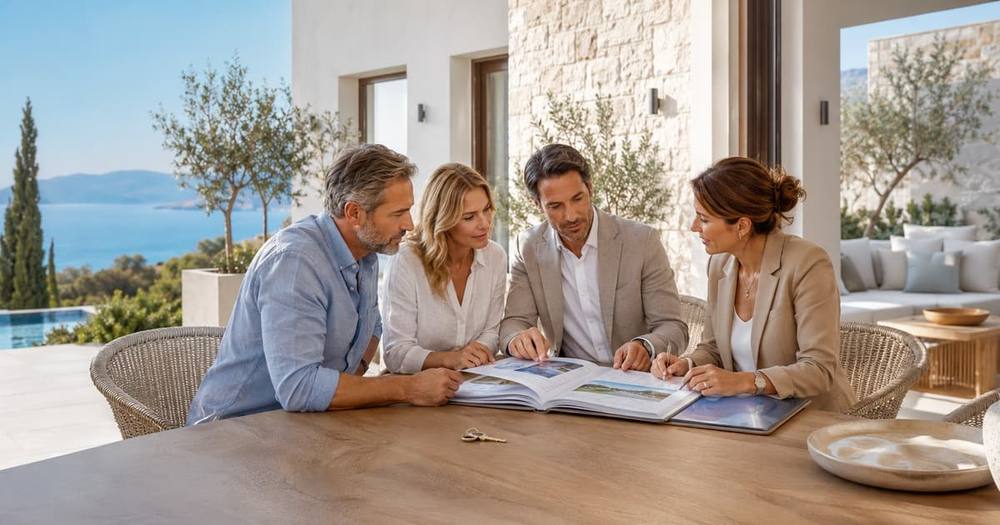
Buying a home, holiday villa, apartment, plot of land or investment property in Greece can be a rewarding decision. The country combines an attractive Mediterranean lifestyle with a diverse real estate market, from city apartments and traditional village houses to newly built villas and coastal properties. Nevertheless, a successful purchase requires more than finding a beautiful property. Buyers must understand how the Greek legal, technical, tax and notarial process works, which professionals should be involved, what documents must be checked and how the purchase price should be transferred and documented.
This detailed guide explains the property buying process in Greece from the first planning stage to the final registration of ownership and the practical steps after completion. It is designed especially for international buyers who may live abroad, may not speak Greek and may be unfamiliar with the roles of the lawyer, notary, civil engineer, accountant and real estate agent. It also highlights important questions that are particularly relevant in Chalkidiki, where many buyers search for holiday homes, sea-view villas, rental properties and land for future construction.
Chalkidiki Real Estate supports buyers throughout the journey by helping them define their requirements, identify suitable properties, coordinate viewings and organize communication with independent qualified professionals. Where requested, we can also coordinate paid support after purchase, including renovation, utility registration, maintenance, property management and short-term rental preparation. We do not replace the independent legal, technical, tax or notarial professionals whose approval is essential to a secure transaction.

Do you have questions about the property buying process in Greece or would you like to discuss your requirements personally? Contact me directly by phone, WhatsApp or email.
- Mobile: +30 693 470 9163
- WhatsApp: +30 693 470 9163
- Email: hb@chalkidikirealestate.com
- Location: Chalkidiki Real Estate
- LinkedIn: Hans-Jürgen Bahner – Over 17k Followers
- Bestselling Author: Find My Books Here
Personal support for international property buyers in Chalkidiki and throughout Greece.
On this page
Select a topic to jump directly to the relevant stage of buying property in Greece.
1. Overview of the Property Buying Process in Greece
The Greek property purchase process is formal and document-driven. Ownership is normally transferred through a notarial purchase deed, followed by registration of that deed with the competent Hellenic Cadastre or Land Registry. Before the deed is signed, the property, seller, title history, planning status and supporting certificates should be checked. The buyer also needs a Greek tax identification number and must complete the required tax and payment arrangements.
A well-managed transaction usually follows a logical sequence. First, the buyer defines the purpose of the purchase and establishes a realistic all-inclusive budget. The search then begins with suitable locations and properties. Once the buyer identifies a preferred property, the price and main conditions are negotiated. A lawyer carries out legal title checks, while an engineer investigates the building, permits, plans, surfaces and potential irregularities. The notary prepares the final deed and coordinates the legally required documentation and tax declaration. After signing and payment, the deed is registered so that the buyer’s ownership is entered in the official records.
The exact sequence can vary. A completed apartment with a clear title is different from an old village house requiring legalization, an off-plan villa, agricultural land or a property forming part of an inheritance. The buyer’s nationality, source of funds, financing arrangements, intended use and possible residence-permit plans can also affect the preparation. For that reason, internet checklists should be treated as a framework rather than a substitute for property-specific advice.
The core stages at a glance:
- Clarify purpose, requirements and total budget.
- Select a location and shortlist suitable properties.
- Appoint an independent lawyer, engineer and accountant; choose the notary.
- Obtain an AFM and arrange representation where necessary.
- Negotiate a written offer subject to satisfactory checks.
- Complete legal and technical due diligence.
- Prepare the transfer tax declaration and pay the assessed amount.
- Sign the notarial deed and complete the agreed payment.
- Register the deed with the competent cadastral or land registration office.
- Complete E9, utilities, insurance and property-management arrangements.
2. Define Your Goals and Your Total Purchase Budget
A focused buying strategy begins before the first viewing. Decide whether the property will be a permanent residence, holiday home, retirement base, long-term rental, short-term holiday rental, renovation project, development site or a combination of these purposes. A property that is ideal for private summer use may not be equally suitable for year-round living. Likewise, a home with impressive sea views may involve steep access, greater exposure to wind, higher maintenance or limited walkability.
Create a written requirement list divided into essentials and preferences. Essentials might include a maximum driving time to Thessaloniki Airport, legal road access, a certain number of bedrooms, year-round infrastructure, reliable internet, parking or step-free access. Preferences might include a swimming pool, uninterrupted sea views, walking distance to a beach or space for a guest house. This prevents attractive photographs from distracting you from practical requirements.
Your financial ceiling should include considerably more than the advertised price. Budget for taxes, notary fees, legal and engineering advice, registration, translations, agent fees where applicable, banking costs, insurance, immediate repairs, furniture and utility activation. If renovation is likely, obtain at least a preliminary technical view before committing. Older properties can offer character and value, but hidden roof, moisture, electrical, drainage or structural work can materially change the overall investment.
If the purchase is linked to an investment plan, prepare conservative income and expense scenarios. Do not assume that peak-season nightly rates apply throughout the year. Include cleaning, platform costs, local management, maintenance, pool and garden expenses, energy consumption, taxation, insurance, licensing or registration requirements and replacement reserves. If the property is intended for a residence permit, obtain current immigration advice before structuring the transaction; buying real estate and qualifying for a particular permit are related but legally separate questions.
3. Choose the Right Location and Property Type
Greece is not one uniform market. Athens, Thessaloniki, Chalkidiki, Crete, the Cyclades, the Ionian Islands and mainland villages differ in prices, accessibility, building characteristics, rental seasons and planning constraints. Even within Chalkidiki, Kassandra, Sithonia and the wider mainland area offer different experiences. Kassandra is known for established resorts, entertainment and strong seasonal demand. Sithonia offers dramatic natural scenery, beaches and a quieter character. Locations closer to Thessaloniki may provide more convenient year-round access and services.
Visit the area at different times of day and, where possible, outside the peak summer season. Check road access, traffic, winter activity, shops, pharmacies, healthcare, noise, mobile reception, water pressure, drainage and waste collection. Ask how the immediate surroundings may change. An undeveloped plot in front of a villa may later be built on if planning rules permit, which could alter the view or privacy.
Property type also affects due diligence. Apartments require checks of common areas, building regulations, shared expenses and any exclusive-use rights. Detached houses require closer attention to boundaries, access, external structures, retaining walls, pools, septic systems and landscaping. Traditional houses may include older extensions or unclear plans. Plots require careful verification of buildability, permitted use, access to a legally recognized road, forestry status, archaeology, coastline restrictions and utility availability. New-build purchases require a clear construction specification, milestone schedule, warranties, permit review and contractual remedies for delay or deviation.
Do not choose only by price per square metre. Legal certainty, construction quality, micro-location, operating costs, orientation and future resale liquidity can be more important than a superficially low asking price. A properly documented property that needs cosmetic improvement may be a safer purchase than a visually renovated property with unresolved planning issues.
4. Build an Independent Professional Team
Several professionals contribute to a Greek property purchase, and their functions should not be confused. The real estate agent identifies properties, provides market context, arranges viewings and facilitates communication and negotiation. The buyer’s lawyer protects the buyer’s legal interests, examines ownership and encumbrances, reviews agreements and explains contractual obligations. A civil engineer or other appropriately qualified engineer investigates permits, plans, surfaces, boundaries and technical condition. The accountant or tax adviser assists with the AFM, tax representation, E9 and ongoing tax obligations. The notary is the public official responsible for preparing and authenticating the deed and ensuring that the required formal documents are present.
International buyers should appoint professionals early, not after paying a large deposit. Select advisers who regularly handle real estate transactions and can communicate clearly in a language you understand. Confirm scope, fee basis and deliverables in writing. Ask whether a written title report and written engineering report will be provided, which searches are included, and whether the adviser has identified any conflict of interest.
The buyer should normally have independent advice even if the seller, developer or agent recommends a professional. Recommendations can be helpful, especially in areas where local knowledge matters, but the buyer must understand who is acting for whom. The notary is neutral and does not replace the buyer’s lawyer. The engineer’s role is equally important: ownership documents alone cannot confirm that every built structure corresponds to approved plans and applicable rules.
For a complex acquisition, the team may also include an architect, surveyor, mortgage adviser, insurance specialist, translator, immigration lawyer or corporate adviser. The objective is not to involve unnecessary parties; it is to ensure that every material legal, technical, financial and practical question has a competent owner.
5. Obtain a Greek Tax Identification Number (AFM)
A buyer needs a Greek tax identification number, commonly called an AFM, to purchase real estate in Greece. The AFM is used throughout the transaction and for future tax administration. Non-resident buyers may also need to appoint a tax representative and obtain access credentials for the myAADE digital system, depending on their circumstances and the procedures applicable at the time.
The application normally requires identity documents and supporting information. Foreign documents may need apostille or consular legalization and official translation, depending on the document, issuing country and intended use. Names should be consistent across passports, tax records, powers of attorney, bank documentation and the eventual deed. Small discrepancies in spelling, multiple surnames or transliteration can cause delays if they are not identified early.
Chalkidiki Real Estate can coordinate paid assistance for obtaining an AFM in cooperation with a qualified Greek accountant or tax adviser. The professional will confirm the current documentation and representation requirements for the individual applicant. This is especially useful for buyers who are abroad and want to prepare before travelling for viewings or completion.
Obtaining an AFM does not by itself make someone a Greek tax resident. Tax identification, ownership of Greek property and tax residence are distinct concepts. Buyers who plan to move permanently, spend substantial time in Greece, operate a business or receive rental income should obtain individualized cross-border tax advice.
6. Banking, Source of Funds and Payment Planning
Payment planning should begin early. Greek professionals and financial institutions must comply with anti-money-laundering and source-of-funds requirements. A buyer may be asked to provide passport and address information, tax returns, bank statements, sale agreements, inheritance records, company accounts or other evidence showing how the purchase funds were accumulated. Preparing a coherent evidence file avoids last-minute delays.
A Greek bank account can be useful for utilities, taxes, insurance, recurring property expenses and local payments, although the exact need and available payment route should be confirmed with the notary, lawyer, accountant and bank. Chalkidiki Real Estate can provide paid coordination support for private account-opening applications with banks such as Eurobank or Alpha Bank, subject entirely to the bank’s compliance checks and approval. No agent can guarantee that a bank will open an account.
Before transferring money, confirm the correct recipient account, payment reference, currency, transfer limits, processing time and documentation required for the deed. Never rely solely on payment instructions received in an unexpected email. Verify bank details through a separate trusted channel because property transactions are frequent targets for payment-diversion fraud.
If financing is required, obtain a realistic mortgage assessment before making an unconditional offer. Non-resident lending criteria, loan-to-value ratios, income documentation, valuations and processing times can differ from those in the buyer’s home country. The purchase contract, reservation arrangement and timetable should reflect the financing condition. Buyers should not assume that a reservation deposit will automatically be refunded if finance is declined unless the written agreement explicitly provides for this outcome.
7. Property Search, Shortlisting and Viewings
A good search process converts broad aspirations into comparable options. Provide your agent with a clear brief covering budget, intended use, preferred areas, property type, minimum accommodation, accessibility, renovation tolerance and timing. Ask for honest information about drawbacks as well as advantages. A productive viewing tour may include different property types so that you can understand local trade-offs before narrowing the search.
During a viewing, examine the surroundings before the interior. Look at access roads, slope, neighbouring buildings, parking, drainage, utility connections and exposure to weather. Inside, note orientation, natural light, ventilation, signs of damp, cracks, window quality, heating and cooling, electrical installations, water pressure and storage. For coastal homes, pay particular attention to salt exposure, corrosion and seasonal humidity.
Photographs and virtual tours are useful for shortlisting, but they should not replace professional inspection. If you cannot attend personally, request a live video viewing and ask a trusted representative to visit. However, visual inspection by an agent is not technical due diligence. The engineer must independently review relevant documentation and, where appropriate, inspect the property.
Keep a structured viewing record. Compare asking price, estimated total cost, location, legal and technical questions, immediate work, ongoing costs, rental potential and resale appeal. This reduces emotional decision-making and enables your advisers to focus on the most promising candidates.
8. Making an Offer and Negotiating the Purchase
An offer should cover more than the price. It should state the property, proposed consideration, items included, deposit structure, intended completion period and essential conditions. Important conditions may include satisfactory legal and technical due diligence, confirmation of financing, resolution of planning irregularities, delivery of specified documents, vacant possession and inclusion of furniture or equipment.
Market evidence helps determine a sensible offer, but individual properties are not interchangeable. Sea view, walking distance to the coast, orientation, legal buildable area, privacy, road access, condition and documentation can create significant differences. An aggressive low offer may be counterproductive in a competitive micro-market, while paying the asking price without checking comparable value is equally unwise.
Use clear written communication and avoid committing before advisers review the wording. State explicitly whether the offer is subject to contract and due diligence. Confirm the currency and whether quoted amounts include or exclude any agent commission, furniture, VAT or other elements. If the property will be handed over later, agree how risk, utilities, maintenance and access are managed during the interim period.
Negotiation may also solve practical problems. Instead of focusing only on price, the parties might agree that the seller completes legalization work, supplies updated plans, repairs a defect, clears outstanding charges or leaves specified furniture. Every material promise should be written into an appropriate agreement or the final deed, not left as an informal understanding.
9. Reservation Agreements, Preliminary Contracts and Deposits
A seller or agent may request a reservation payment to remove the property from the market while checks proceed. The legal effect of reservation forms, private agreements, preliminary contracts and deposits depends on their wording and form. Never assume that a payment is automatically refundable or that it guarantees completion. Ask your independent lawyer to approve the document before signing or transferring funds.
The agreement should identify the property and parties, record the amount, state who holds the funds, explain whether the payment forms part of the price, specify deadlines and define refund or forfeiture conditions. It should address what happens if title defects, encumbrances, unresolvable planning violations, seller default, buyer default, financing failure or missing documentation prevents completion.
Deposits should be proportionate to the transaction stage and risk. A large non-refundable payment before title and engineering checks creates avoidable exposure. Where the seller needs time to correct documentation or planning matters, the agreement should describe the required action and an appropriate long-stop date. Evidence of each payment must be retained and its relationship to the purchase price should be clear.
Practical rule: do not pay a reservation fee merely because another buyer is said to be interested. First confirm the recipient, receive written terms and allow your lawyer to review them. Urgency is never a substitute for due diligence.
10. Legal Due Diligence and Title Investigation
Legal due diligence is one of the most important parts of the property buying process in Greece. The buyer’s lawyer should investigate whether the seller owns the property and has the legal capacity to transfer it. The review commonly includes title deeds, ownership history, cadastral or land registry records, mortgages, prenotations, seizures, claims, easements, rights of way and other registered burdens. The scope and historic period must be determined by the lawyer for the particular property.
The lawyer also compares how the property is described across the title, cadastral records, plans and other documents. Names, percentages, boundaries, floor levels, storage rooms, parking spaces and exclusive-use areas must align. If the seller inherited the property or acquired it through a gift, parental provision, court decision or other special route, additional documentation may be required.
Condominium purchases require review of the horizontal-property deed and building regulations. These documents can affect ownership percentages, common expenses, permitted uses, alterations, pets, signage, short-term rentals or the use of terraces, gardens and parking. A physical feature that appears private may legally be common property or subject only to an exclusive-use right.
Due diligence should also identify litigation, leases, occupants or third-party rights that could affect delivery. The deed must clearly provide the agreed possession status. If the property is rented, the buyer needs advice on the existing tenancy and whether it continues after sale. If the property is offered furnished, prepare an inventory and condition record.
No title review can be replaced by a copy of the seller’s deed alone. The deed shows how the seller claims to have acquired the property; independent registry searches establish what is recorded and whether burdens or later acts affect it.
11. Technical, Planning and Building Due Diligence
The buyer’s engineer should verify that the property’s physical reality corresponds with the approved planning documents and the legal description. This may involve the building permit, approved architectural plans, topographical plan, energy performance documentation, electronic building identity and any declarations or regularization of unauthorized construction. Requirements vary by property type and transaction.
Common issues include enclosed balconies, extended terraces, converted basements, pergolas, storage rooms, pools, retaining walls, boundary changes or internal alterations that are absent from approved plans. Some irregularities may be capable of lawful regularization; others may not. The buyer needs a clear written explanation of the status, cost, responsibility, timetable and residual risk before committing.
Technical due diligence should not be limited to regulatory compliance. Request an inspection of the building’s condition appropriate to its age and value. Structural movement, damp, waterproofing failures, roof defects, corrosion, drainage, septic systems, electrical safety, plumbing, heating and cooling, windows and insulation can significantly affect future expenditure. A general viewing cannot determine every hidden defect, but a competent inspection can identify warning signs and recommend specialist tests.
For coastal properties, investigate salt-related deterioration, stormwater management, retaining structures and seasonal water availability. For hillside homes, examine access, slope stability and drainage. For properties with pools, confirm that the pool is documented and review the plant, waterproofing and safety arrangements. For properties advertised with a private road or beach access, establish the legal basis rather than relying on customary use.
Agree in writing what the engineering report will cover. A document-compliance check and a building-condition survey are not necessarily the same service. The buyer may require both.
12. Special Checks When Buying Land or a Building Plot
Land purchases require enhanced caution because a plot’s value depends heavily on what may legally and practically be built. A description such as “buildable,” “close to the sea” or “ideal for villas” should never be accepted without independent written verification. Planning rules can depend on location inside or outside a settlement or plan, area, frontage, recognized road access, date of creation, zoning and numerous special restrictions.
An engineer and lawyer should examine the title, topographical survey, boundaries, cadastral data, access rights and buildability. Relevant checks may include forestry maps, archaeological controls, coastline and beach lines, streams, protected areas, land use, high-voltage infrastructure and local planning provisions. The exact list depends on the site.
Physical access is not always the same as legal access. A track used for years may cross another owner’s land or may not satisfy planning requirements. Likewise, the availability of electricity, water, drainage and telecommunications should be confirmed with realistic connection costs. Remote plots can require private solutions or substantial infrastructure work.
If you have a development concept, obtain an initial feasibility assessment before purchase. The assessment should consider permitted building area, coverage, height, setbacks, parking, pool, retaining walls, excavation, orientation and access. A conceptual layout can reveal whether the desired home fits comfortably rather than merely theoretically. Construction budget estimates should include professional fees, permits, site works, connections, landscaping, taxes and contingencies.
13. Property Purchase Costs and Taxes in Greece
The total acquisition budget includes the price plus transaction costs. The exact amount depends on the property, tax basis, professional agreements, whether VAT or transfer tax applies, financing and complexity. Request individualized written estimates rather than relying on a single percentage found online.
According to Greece’s Independent Authority for Public Revenue, real estate transfer tax is generally imposed on the buyer and the published standard rate is 3% of the taxable value, with the applicable municipal levy and procedural rules. The tax declaration is generally submitted before execution of the deed, often digitally through the myPROPERTY process involving the notary. Certain transactions, including some new properties or special circumstances, can have different VAT or exemption treatment; the notary and tax adviser must confirm the position at the transaction date.
Other costs can include notary remuneration, cadastral or registry charges, lawyer fees, engineer fees, agent commission where payable by the buyer, translations, apostilles, powers of attorney, bank charges, valuations and mortgage-related fees. Ongoing costs after purchase may include ENFIA property tax, municipal charges collected through electricity bills, insurance, common expenses, utilities, maintenance, pool and garden care, accounting and rental-management costs.
| Cost category | Why it arises | What to confirm |
|---|---|---|
| Purchase price | Agreed consideration for the property and included items | Payment schedule, currency, recipient and documented method |
| Transfer tax or VAT | Tax treatment applicable to the transaction | Taxable basis, current rate, exemptions and payment deadline |
| Notary and registration | Preparation/authentication of deed and registration of ownership | Estimate based on value, deed complexity and pages |
| Legal and technical advice | Title, contract, permit, plan and condition checks | Scope, written reports and additional specialist work |
| Agent fee | Property search, viewings and transaction facilitation | Agreed rate, VAT, trigger and whether buyer pays |
| Post-purchase budget | Utilities, insurance, repairs, furnishings and management | Initial cash reserve and annual operating plan |
Tax incentives or first-home exemptions may have detailed eligibility conditions and should never be assumed. Foreign buyers should also ask advisers in their country of residence about reporting obligations, wealth taxes, inheritance planning and the treatment of future rental income or gains.
Your local contact in Chalkidiki
Get in Touch with Hans-Jürgen Bahner
Do you have questions about the property buying process in Greece or would you like to discuss your requirements personally? Contact me directly by phone, WhatsApp or email.
- Mobile: +30 693 470 9163
- WhatsApp: +30 693 470 9163
- Email: hb@chalkidikirealestate.com
- Location: Chalkidiki Real Estate
- LinkedIn: Hans-Jürgen Bahner – Over 17k Followers
- Bestselling Author: Find My Books Here
Personal support for international property buyers in Chalkidiki and throughout Greece.
14. The Notary, Transfer Tax Declaration and Final Purchase Contract
The transfer of Greek real estate is normally completed by a notarial deed. The notary collects and reviews the documents required for execution, prepares the deed, coordinates the tax declaration and verifies formal aspects of the transaction. The notary is impartial and does not act as the buyer’s personal legal adviser, so the buyer’s lawyer should review the draft and explain it before signing.
The deed describes the parties, property, ownership title, consideration, tax details, payment method, supporting certificates and relevant declarations. The buyer must understand exactly what is being acquired: full ownership, bare ownership, usufruct, a percentage share, horizontal property, land, parking, storage or associated rights. Plans and attachments should be checked against the agreed property.
Ask for the draft sufficiently early for meaningful review and translation. If the buyer does not understand Greek, appropriate interpretation or translation arrangements are required. Do not sign based on a brief verbal summary. Names, passport details, AFM, purchase price, payment references and property description should be checked carefully.
Before signing, the agreed transfer tax must be handled in accordance with the applicable procedure. Funds must be available through an accepted, traceable payment route. The lawyer should confirm that due-diligence issues and contract conditions have been resolved, and the engineer should confirm that the technical documentation is acceptable. Completion should not proceed merely because a travel date or bank transfer has already been arranged.
Once all parties sign, obtain certified copies and a clear completion statement showing amounts paid, outstanding steps, keys and possession. The signed deed must then be submitted for registration; signing alone is not the final administrative step.
15. Registering Ownership with the Cadastre or Land Registry
After completion, the purchase deed must be registered with the competent Hellenic Cadastre or Land Registry office. Registration makes the transfer effective in the public property records and produces evidence that the deed has been entered. The competent office depends on the property’s location and the status of cadastral implementation in that area.
The lawyer or notary will normally coordinate submission, associated fees and receipt of registration evidence. The buyer should retain the registered deed, submission receipt, registration certificate and cadastral references with the permanent property file. Confirm that names, ownership percentages and property identifiers have been recorded correctly.
If an inconsistency appears in the cadastral record, obtain legal advice promptly. Correction procedures depend on the type of error and registration status. Do not assume that a discrepancy is merely clerical or can always be fixed quickly.
A complete property file should include the registered deed, prior title documents supplied for the transaction, cadastral extract, plans, building permit, engineer certificates and reports, energy certificate, electronic building identity documentation, tax payment evidence, E9 record, insurance, utility contracts, warranties, inventories and renovation documents. Organized records make future management, permitting, financing, inheritance and resale significantly easier.
16. What to Do After Buying Property in Greece
Completion marks the beginning of ownership responsibilities. Your accountant should confirm that the acquisition appears correctly in the E9 property statement and advise on ENFIA and other tax obligations. The Greek tax authority states that foreign residents who acquire Greek property are also subject to E9 reporting rules; digital processes may automatically populate certain transactions, but the record should still be checked by a qualified adviser.
Arrange building and contents insurance appropriate to the property, location and intended use. Cover may need to address earthquake, fire, storm, water damage, liability, pool, rental activity or periods when the home is unoccupied. Read exclusions and security requirements carefully.
Transfer or activate electricity, water, telecommunications and any shared-building accounts. Our utility-registration service in Chalkidiki can support this practical handover stage. Record meter readings at handover and document keys, remote controls, equipment manuals and defects. If the property will remain empty, appoint a reliable local contact for inspections, storm checks, ventilation, maintenance and emergencies.
Before renovation, obtain technical advice and the necessary approvals. Ownership does not give unrestricted freedom to alter facades, structure, pools, walls, terraces or use. Keep invoices, permits, plans and photographs so the property record remains ready for future sale.
If the home will be rented, establish the correct tax, registration, licensing, safety, insurance and operational framework before advertising. Short-term rental rules evolve and can vary by activity and services. A local management plan should cover guest communication, check-in, checkout, cleaning, linen, maintenance, pricing, complaints and emergency response.
17. Buying Greek Property from Abroad by Power of Attorney
International buyers do not always need to be present for every administrative step. A carefully drafted power of attorney can authorize a trusted lawyer or other representative to obtain an AFM, handle tax procedures, sign specified documents, communicate with banks or utilities and, if expressly authorized, complete the purchase. The scope should be tailored and explained before execution.
A power of attorney signed abroad may require execution before a Greek consular authority or a competent foreign notary, together with apostille or consular legalization and official translation, depending on the issuing country. Your Greek lawyer and notary should provide the exact wording and formalities before you book an appointment. Do not use a generic internet template.
Remote purchasing demands disciplined communication. Establish how offers, documents and payments will be approved. Use video calls to review the property and written reports. Independently verify bank instructions and keep copies of all authorizations. Where possible, visit the property personally before final commitment, especially for a home intended for private use.
The representative should have no broader authority than necessary. Ask how the power can be revoked, when it expires and whether it permits delegation. A well-structured power of attorney can make the process efficient without reducing the quality of due diligence.
18. New-Build Homes, Off-Plan Purchases and Renovation Projects
Buying a completed resale property differs from buying a home under construction. Our specialist guide to buying off-plan and new-build property in Greece explains the additional safeguards in detail. The buyer should investigate the developer, land title, building permit, approved plans, financing, construction specification, programme and contractual protections. Payments should correspond to clearly defined milestones verified by an appropriate professional rather than only calendar dates.
The specification should be detailed enough to prevent misunderstanding. It can cover structure, insulation, waterproofing, windows, flooring, sanitary ware, kitchen, electrical capacity, HVAC, solar systems, pool, landscaping, boundaries, access, drainage, utility connections and energy performance. Drawings should identify dimensions and included external areas. Brand substitutions, tolerance, change orders, delays, inspections, defects and handover documentation need contractual treatment.
For renovation properties, request an early feasibility and cost assessment. Establish which elements can be retained, whether proposed alterations require permits, whether existing irregularities must be resolved and how access affects construction logistics. Coastal and village environments can create special material, delivery and seasonal restrictions.
Chalkidiki Real Estate can coordinate paid renovation and construction-management services after acquisition, including communication with architects, engineers, contractors and trades. The service can extend from initial requirements and quotation comparison to progress coordination, maintenance and preparation for private use or rental. Professional responsibilities, permits and technical sign-offs remain with the appropriately licensed specialists.
19. Buying for Rental Income or Investment
An investment property in Greece should be assessed as an operating business as well as a physical asset. Analyse realistic occupancy, seasonality, nightly or monthly rates, competition, target guests, access, parking, bedroom configuration, outdoor areas and management demands. In Chalkidiki, proximity to the beach and summer demand can be attractive, but the operating season and micro-location materially affect results.
Prepare low, base and high scenarios. Deduct platform charges, management, cleaning, linen, utilities, pool and garden work, repairs, insurance, accounting, taxes, consumables and replacement reserves. Include furnishing and setup costs. A property with lower gross revenue but simpler maintenance may produce a better risk-adjusted result than a complex villa with high headline rates.
Confirm that the intended rental activity is legally and technically compatible with the property, building rules and current regulations. Registration and tax obligations apply to short-term rentals, and the addition of hotel-like services can change the regulatory and business classification. Seek advice before marketing and review the practical scope of Airbnb management in Chalkidiki.
Exit strategy matters. Consider long-term marketability to both domestic and international buyers, not only current holiday-rental popularity. Clear title, compliant construction, accessible location, manageable operating costs and organized records protect resale value. Renovations should improve functionality and durability rather than follow a trend that may date quickly.
20. Common Mistakes Buyers Should Avoid
Paying before independent review
A deposit transferred under pressure can be difficult to recover. Always establish written refund conditions and obtain legal approval first.
Using one professional for every interest
The seller, developer, agent and buyer have different roles. The buyer needs independent legal and technical advice and must understand each adviser’s duty.
Assuming visible construction is legal
A beautiful extension, pool or guest room may not correspond to permits. Engineer verification is essential.
Ignoring access and boundaries
Physical use does not prove legal road access, parking ownership or the exact boundary. Check title, plans and registry data.
Budgeting only for the price
Taxes, fees, repairs, furnishings and annual operation can materially affect affordability. Prepare a total-cost model.
Relying on rental promises
Projected returns should be supported by conservative assumptions and full cost deductions. No occupancy or price is guaranteed.
Skipping translation
The buyer must understand every document signed. Arrange proper translation or interpretation and review drafts in advance.
Confusing purchase with immigration status
Property ownership does not automatically grant residence rights. Obtain current immigration advice for the intended permit route.
Failing to plan after completion
E9, insurance, utilities, security and maintenance should be prepared before handover, especially when the buyer lives abroad.
21. Typical Timeline and Buyer Checklist
There is no guaranteed standard duration. A straightforward transaction with ready documents may progress relatively quickly, while title corrections, legalization, inheritance issues, financing, powers of attorney or missing permits can extend the process. A realistic plan should be driven by completed checks, not an arbitrary completion date.
| Phase | Main activities | Buyer decision gate |
|---|---|---|
| Preparation | Goals, budget, AFM, advisers, funds and search brief | Is the financial and professional setup ready? |
| Search | Shortlisting, viewings, comparison and initial questions | Does the property fit use, location and budget? |
| Offer | Price, conditions, inclusions, deadlines and deposit terms | Is the offer protected by appropriate conditions? |
| Due diligence | Title, registry, permits, plans, building and tax preparation | Are all material findings acceptable or resolved? |
| Completion | Final deed, transfer tax, payment, signature and handover | Are funds, documents and approvals ready? |
| Registration | Submission of deed and confirmation of ownership entry | Has registration evidence been received and checked? |
| Ownership setup | E9, insurance, utilities, maintenance and rental preparation | Is the property legally and practically operational? |
Before you authorize completion, confirm:
- Your lawyer has approved title and contract.
- Your engineer has approved the technical and planning position.
- The final property description and included rights are correct.
- All deposit and purchase payments are documented.
- Tax, notary and registration funds are available.
- You understand the deed through translation or interpretation.
- Possession, keys, furniture and meter readings are agreed.
- The deed-registration and post-completion responsibilities are assigned.
22. How Chalkidiki Real Estate Supports International Buyers
Buying in another country is easier when one local contact coordinates the practical journey. Chalkidiki Real Estate begins by understanding your intended use, location preferences, budget and long-term plans. We identify relevant properties, organize viewings, provide local market context and help structure communication during negotiation.
We can introduce and coordinate with independent Greek lawyers, notaries, engineers and tax advisers. Each regulated professional remains responsible for their own advice, reports and decisions. Our role is to help the process move coherently, make open questions visible and ensure that the practical requirements of an international buyer are not overlooked.
After completion, our paid services can continue with utility registration, renovation and remodeling, construction coordination, electrical and plumbing work, HVAC, windows and outdoor improvements, Starlink and smart-home solutions, maintenance, garden and pool care, and Airbnb or short-term rental management. This continuity is particularly valuable for owners who live abroad and need a reliable local partner.
Every property and buyer is different. A free initial consultation allows us to understand whether you are at the early planning stage, already visiting Chalkidiki or ready to evaluate a specific property. We can then explain how our property-search and coordination services can fit your project.
Frequently Asked Questions About Buying Property in Greece
Can foreigners buy property in Greece?
Do I need a Greek tax number to buy property?
Do I need a Greek bank account?
Is a lawyer mandatory when buying in Greece?
Why do I need an engineer?
What does the notary do?
How much is property transfer tax?
What other costs should I budget for?
Should I pay a reservation deposit?
How long does buying property in Greece take?
Can I buy without travelling to Greece?
Can I obtain a mortgage in Greece as a non-resident?
Does buying a property automatically give me residence in Greece?
Can I rent out the property on Airbnb?
What is the E9 declaration?
What should be checked when buying a plot?
What happens if an extension or pool is not shown on the plans?
Is a sea view legally protected?
Can Chalkidiki Real Estate manage the property after purchase?
What is the safest first step?
Do you have questions about the property buying process in Greece or would you like to discuss your requirements personally? Contact me directly by phone, WhatsApp or email.
- Mobile: +30 693 470 9163
- WhatsApp: +30 693 470 9163
- Email: hb@chalkidikirealestate.com
- Location: Chalkidiki Real Estate
- LinkedIn: Hans-Jürgen Bahner – Over 17k Followers
- Bestselling Author: Find My Books Here
Personal support for international property buyers in Chalkidiki and throughout Greece.
Continue the Buying Property in Greece Cluster
The purchase sequence connects with costs, legal checks, documents and financing. Use these connected guides to prepare every stage of a Greek property purchase.