
Buying Off-Plan Property in Greece – Complete Guide
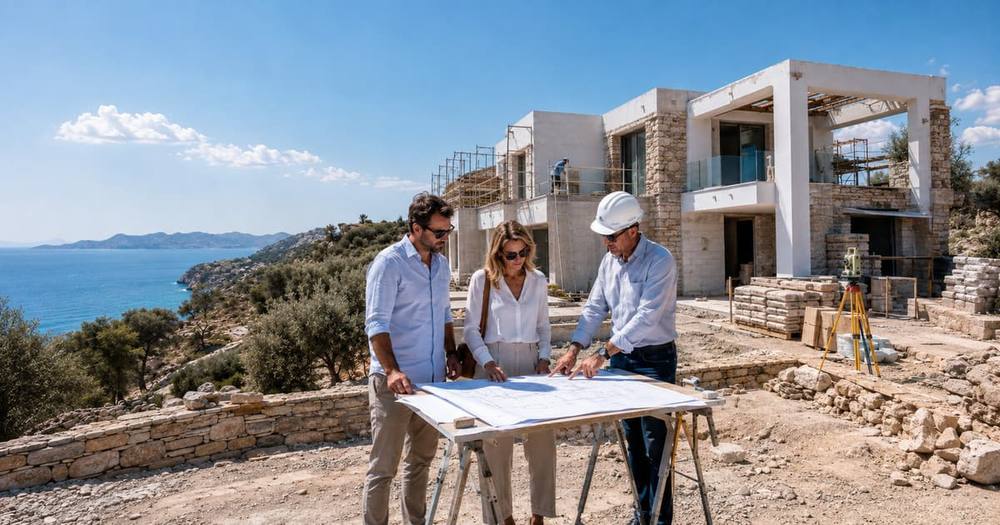
Buying a property before construction is complete can give an international buyer access to modern design, energy-efficient systems, new materials and a home tailored to personal requirements. It can also involve more uncertainty than buying an existing building. At reservation stage, the buyer may be relying on architectural drawings, specifications, permits, a construction programme and the developer’s promise to deliver a future legal property.
A secure purchase therefore depends on more than selecting tiles and approving a sea-view rendering. The buyer must understand who owns the land, whether the developer has authority and financial capacity, what the building permit actually authorises, how the future unit will be legally created, when payments become due, who certifies progress, what happens if completion is late, and which documents are required before title and possession can be delivered.
This guide explains buying off-plan and new-build property in Greece from developer due diligence and building permits to milestone payments, construction monitoring, snagging, completion and registration. It also describes how Chalkidiki Real Estate can coordinate the practical process with independent lawyers, engineers, architects, notaries, accountants, banks, insurers and contractors. Each regulated professional remains responsible for their own advice, approval and formal work.

Do you have questions about buying off-plan or new-build property in Greece, or would you like to discuss a development project personally? Contact me directly by phone, WhatsApp or email.
- Mobile: +30 693 470 9163
- WhatsApp: +30 693 470 9163
- Email: hb@chalkidikirealestate.com
- Location: Chalkidiki Real Estate
- LinkedIn: Hans-Jürgen Bahner – Over 17k Followers
- Bestselling Author: Find My Books Here
Personal support for international property buyers and new-build projects in Chalkidiki and throughout Greece.
On this page
Select a topic to jump directly to the relevant stage of the project.
What Off-Plan and New-Build Mean
An off-plan property is purchased on the basis of plans and contractual promises before it is fully constructed. The project may exist only as approved drawings, may be at foundation stage or may be substantially built but not yet legally and technically complete. A new-build property is newly constructed, although it may already be finished when sold.
The distinction matters because the evidence available changes over time. Before construction, the buyer examines land title, developer, permit, drawings, specification and contract. During construction, progress reports, variations and payment certificates become central. At completion, the focus shifts to inspections, building identity, utilities, final certificates, deed and registration.
Marketing language is not a legal category. “Turnkey,” “luxury,” “fully licensed” or “ready soon” must be converted into measurable contract obligations. The buyer should know the exact legal right being purchased, the approved configuration, included works, completion definition and remedies.
Benefits and Risks at a Glance
| Potential benefit | Corresponding risk to manage |
|---|---|
| Modern layout and energy systems | Final construction may differ from renders or early plans. |
| Choice of finishes | Allowances, deadlines and variation prices may be unclear. |
| Staged payments | Buyer money may be paid before equivalent value is delivered. |
| Lower maintenance initially | Defects may appear after occupation and require enforcement. |
| Potential value growth during construction | Market conditions and completion timing can change. |
| New legal and technical file | The file may remain incomplete if approvals or registrations lag. |
| Purpose-built rental features | Rental use may face planning, condominium or regulatory restrictions. |
Off-plan purchasing is not inherently unsafe. Risk arises when future delivery is funded or contractually accepted without independent verification, balanced payment protection and precise documents.
Important: Greek construction, planning, tax and contract requirements can change and every project is different. Obtain transaction-specific advice from an independent Greek lawyer, engineer, notary and accountant before signing or paying money.
Understand What You Are Buying
The buyer must identify the legal structure before discussing finishes. Is the transaction an immediate purchase of land followed by a separate construction contract? Is the developer selling a future horizontal or vertical property? Is title transferred only when the building is complete? Is the buyer acquiring shares in a company rather than real estate?
Each structure creates different ownership, insolvency, tax, payment and registration risks. A contract that gives only a personal claim against the developer is different from registered ownership of land. A buyer who owns land during construction may have different responsibilities for permits, contractors and insurance.
The lawyer should prepare a plain-English structure summary identifying current owner, future seller, contractor, permit holder, financed party, property right, transfer moment and security for buyer payments. If several companies carry similar names, their roles must be stated precisely.
Developer Due Diligence
The developer’s brochure and completed show home are useful but not sufficient. The buyer’s lawyer and accountant should investigate the legal entity, registration, representatives, beneficial owners, authority, insolvency indicators, litigation where relevant and ability to enter the proposed contracts.
Ask for previous projects, completion dates, references and evidence of after-sales response. Inspect finished buildings after several seasons, not only newly staged units. Speak with owners about defects, common areas, utility connection and documentation.
Identify the actual construction company and supervising professionals. The landowner, developer, contractor and marketing company may be different entities. Contract remedies are only useful if directed against an appropriate and solvent party.
Due diligence does not guarantee future performance, but it can reveal whether the project structure and track record justify the proposed level of advance payment.
Land Ownership and Title
The entire project rests on the land. The buyer’s lawyer should verify who owns it, how ownership was acquired, whether all co-owners consent, and whether title and cadastral information correspond to the physical parcel.
Registry and Cadastre searches should examine mortgages, prenotations, seizures, claims, easements and restrictions. Access rights, road frontage and services must not be assumed from construction activity.
The engineer compares title area, KAEK, topographic diagram, coordinates and site. Boundaries, neighbouring rights and any required land correction should be resolved before the buyer relies on a future unit.
If the developer does not own the land, the lawyer must examine the development agreement and authority to sell or build. A landowner’s promise and a developer’s brochure are not substitutes for enforceable rights.
Mortgages, Charges and Project Finance
Development land may secure bank or private financing. A project mortgage does not automatically prevent sales, but the buyer needs a reliable release mechanism for the future unit or share.
The file should identify creditor, secured amount, relevant property, release conditions and timing. If buyer payments repay the project loan, the contract should state how payment produces a specific release and what evidence follows.
A general statement that the bank “supports the project” is not a legal release. The buyer’s lawyer should review direct bank confirmations and registration requirements.
New burdens must also be controlled during construction. Depending on the structure, contractual and registrable protections may be required to prevent the buyer’s interest from being subordinated.
Planning and Buildability
Before trusting the proposed development, an independent engineer should review land classification, planning zone, buildability, permitted use, coverage, height, setbacks, access and special restrictions.
Coastal, forest, archaeological, Natura, traditional-settlement and watercourse issues can affect design and approval. Chalkidiki projects may also involve steep sites, retaining structures and access infrastructure that are visually understated in renders.
Buildability is not proved merely because nearby houses exist. Rules and parcel circumstances differ. The conclusion must relate to the specific land and approved project.
If a permit is pending, the buyer should understand which authority decisions remain and what happens if the approved design is smaller or different.
Greek Building Permit and e-Άδειες
Greek building permits and related administrative acts are managed through the e-Άδειες system by authorised engineers. Official guidance confirms that construction, additions, significant alterations, pools, retaining walls and other defined works require the appropriate permit unless a specific smaller-work route applies.
The buyer should obtain the permit number, issue date, status, validity and complete approved file. Check landowner, project description, areas, uses and responsible engineers. A screenshot or application number is not equivalent to an issued valid permit.
Permits can be revised. Ask whether amendments are pending or anticipated and require delivery of every revision. The contract should address material changes that reduce area, alter views, access, parking, pool or common facilities.
Independent review should confirm that construction follows the current approved plans. Approval does not guarantee workmanship, developer solvency or contractual delivery.
Approved Plans vs Marketing Plans
Architectural renders are persuasive sales tools, but they may show landscaping, furniture, glazing, lighting, sea visibility and proportions differently from the permit file. Only clearly incorporated contractual documents define delivery.
Create a controlled drawing schedule listing title, number, revision and date. The buyer, lawyer, engineer and developer should refer to the same set. Mark permit drawings, construction drawings and marketing illustrations separately.
Calculate internal area, covered veranda, open terrace, storage, parking, land share and common areas using consistent definitions. “Total area” can combine categories that have very different value and legal status.
If the developer retains reasonable design flexibility, set limits and notification rules. A clause allowing any change required by authorities should not become unlimited discretion to reduce buyer value.
Horizontal or Vertical Ownership
A future apartment or villa within a larger parcel may need to be legally defined through horizontal or vertical ownership. The constitutive deed and plans allocate ownership percentage, private unit, common areas, exclusive-use spaces, access and obligations.
Parking, storage, garden and pool may be independent rights, appurtenances, exclusive-use areas or common facilities. The distinction affects control, maintenance and resale.
Review draft regulations before purchase. They may govern rental use, exterior changes, pets, noise, solar panels, parking, pool hours and community charges.
The final ownership structure must match the completed construction and notarial deed. Changes during building may require updated plans, tables and approvals.
Reservation Agreement
A reservation may remove the unit from sale while due diligence and contracts proceed. It should identify the exact project, provisional unit, price, payment holder, reservation period and refund conditions.
Buyer protection should include satisfactory legal and technical review, permit verification, agreement of full contract, finance where required and approval of material specifications. A non-refundable deposit before these checks transfers excessive risk.
Ask whether the payment is held by the developer, lawyer, notary or another party and under what authority. Obtain a receipt and verified bank details.
The reservation should not promise completion or ownership beyond what the developer can legally deliver. Have the buyer’s lawyer review it before signature.
Construction and Purchase Contract
The contract must translate a future building into enforceable obligations. It should identify parties, land, unit, plans, specifications, price, taxes, payment stages, completion date, extension events, inspection, defects, handover, title transfer, default and dispute process.
If purchase and construction are separate contracts, they must work together. The buyer should not acquire land without an effective construction obligation or fund works without secure land rights.
Define what “completion” means. Physical usability, engineer certification, utility connection, building-identity documentation, deed readiness and registry eligibility may occur at different times.
Contract language, governing law and jurisdiction should be understood. Translation helps comprehension, but the lawyer should confirm which version controls.
Technical Specification
The specification should describe structure, insulation, waterproofing, windows, doors, flooring, sanitary ware, kitchen, electrical system, heating, cooling, hot water, lighting, paint, landscaping, pool and external works.
A brand reference should include model or measurable performance and a procedure for unavailable products. “Equivalent quality” without approval standards creates disputes.
Allowances should state monetary value, VAT treatment, supplier and selection deadline. Clarify installation labour, delivery and waste costs.
The specification should identify exclusions: furniture, appliances, curtains, lighting fittings, internet equipment, pool heating, irrigation and connection charges. A show home may contain items outside the base price.
Variations and Buyer Changes
Buyer changes can personalise the home but create permit, cost and schedule risk. Require a written variation stating drawing, description, price, tax, payment, completion impact and approval.
No site instruction should be treated as free or approved. Verbal conversations with trades can bypass design coordination and warranties.
Some changes require permit amendment or engineer approval. A requested pergola, pool enlargement, window change or room conversion may not be legally available.
Set a variation deadline after which structural or concealed-service changes are no longer accepted. Keep an updated variation register and final as-built record.
Price and Payment Structure
Establish whether the stated price includes VAT or other applicable tax, land, building, permits, professional work, utility connections, common areas, landscaping, pool, appliances and registration-related deliverables.
Separate reservation, land price, construction instalments, upgrades and closing balance. Every payment needs a contractual basis and invoice or receipt.
Payments should correspond to independently verifiable value. A large early payment that primarily funds general developer activity creates exposure if the project stops.
Budget beyond contract price for legal, technical, notarial, tax, bank, insurance, furnishing, maintenance and contingency costs. See Costs and Taxes When Buying Property in Greece.
Milestone Payments
Milestones should be objective: permit issued, foundations completed, structural frame completed, roof/weatherproof stage, installations completed, finishes completed, practical completion and final legal completion.
A calendar date alone does not prove work. The buyer’s independent engineer should inspect and certify the agreed stage before payment.
Define whether partial achievement qualifies and how disputed work is handled. Photographs from the developer are useful progress evidence but not independent certification.
Keep a payment ledger showing contract stage, certification, invoice, amount, currency, bank receipt and cumulative percentage. The financial record should reconcile with the final deed and tax documentation.
Protecting Advance Payments
Protection depends on transaction structure. Options may include staged payments, retention, bank guarantee, escrow-like arrangements, registered rights or direct release mechanisms. Availability and legal effect require Greek legal advice.
Ask what happens to each payment if the developer becomes insolvent, the permit is revoked, completion becomes impossible or the contract terminates. A refund promise is only as strong as the payer’s legal position and counterparty resources.
A final retention can motivate completion of defects and documents. Its amount, release conditions and dispute mechanism should be written.
Never pay to an unverified changed account. Confirm instructions independently and ensure the recipient matches the contract or authorised arrangement.
Construction Programme and Delays
The programme should identify commencement, milestones, utility applications, inspections, completion, deed readiness and handover. Link dates to dependencies rather than presenting one optimistic completion date.
Define permitted extensions for weather, authority delay, force majeure and buyer variations. Extensions should require notice, evidence and mitigation.
Contract remedies can include agreed compensation, termination rights or other measures drafted by the lawyer. Remedies must be proportionate and enforceable.
Buyers should not book permanent relocation, rental commitments or furniture deliveries until completion readiness is confirmed by the relevant professionals.
Independent Engineer
The developer’s engineer designs, submits and supervises for the project. The buyer’s independent engineer reviews on behalf of the buyer. These roles are complementary, not interchangeable.
The buyer’s engineer can review permit, plans, specification and site conditions; inspect milestones; issue progress observations; attend snagging; and compare completion documents with construction.
The engagement should state inspection frequency, reporting format, exclusions and authority. The engineer does not control the contractor unless contractually appointed to do so.
Reports should include dated photographs, drawing references, observed status, defects, documents reviewed, payment recommendation and unresolved matters.
Construction Monitoring
Monitoring should be planned at risk-sensitive stages: excavation and foundations, structure, waterproofing before covering, concealed plumbing and electrical work, insulation, windows, finishes and external drainage.
Remote buyers benefit from regular standardised reports rather than informal video. Record progress against programme, approved drawings, specification, variations and earlier defects.
Tests and product certificates should be collected during construction. Once waterproofing or installations are concealed, later verification becomes difficult.
Monitoring cannot eliminate all defects, but early identification is usually easier and cheaper than repair after handover.
Your local contact in Chalkidiki
Get in Touch with Hans-Jürgen Bahner
Do you have questions about buying off-plan or new-build property in Greece, or would you like to discuss a development project personally? Contact me directly by phone, WhatsApp or email.
- Mobile: +30 693 470 9163
- WhatsApp: +30 693 470 9163
- Email: hb@chalkidikirealestate.com
- Location: Chalkidiki Real Estate
- LinkedIn: Hans-Jürgen Bahner – Over 17k Followers
- Bestselling Author: Find My Books Here
Personal support for international property buyers and new-build projects in Chalkidiki and throughout Greece.
Quality Control
Quality must be measurable. Review concrete and structural records where relevant, waterproofing details, drainage falls, insulation continuity, window installation, electrical protection, plumbing pressure and equipment commissioning.
Coastal exposure increases importance of corrosion resistance, seals, external finishes and wind-driven rain. Pools and retaining walls require particular attention on sloped sites.
Samples and mock-ups help define expected finish for stone, tiles, paint, joinery and façade. Approve them in writing and photograph them.
Cosmetic perfection is not the only goal. Hidden moisture, insufficient drainage or incomplete electrical documentation may matter more than a minor paint mark.
Utilities and Infrastructure
Clarify responsibility and cost for electricity, water, sewage or septic system, telecommunications, road access, drainage, waste and any shared networks.
A nearby line does not guarantee immediate connection or capacity. Ask for applications, approvals, expected meter arrangements and temporary supply plans.
For a development, define who owns and maintains internal roads, pumps, tanks, lighting, gates and treatment systems. Shared infrastructure requires long-term funding.
Handover should include meter numbers, readings, certificates, account-transfer information and operating instructions. Our Utility Registration and Administrative Services team can support post-purchase coordination.
Common Areas and Shared Facilities
Shared pools, gardens, roads, walls, parking, security and plant rooms require legal definition, completion standards and management rules.
Review allocation of ownership percentages and operating costs. A smaller unit may not automatically pay a proportionate share if the regulation uses another formula.
Ask who manages the development before owners take control, the initial budget, reserve fund, service contracts and developer rights over unsold units.
Common areas should be included in inspection and handover. A finished private villa does not compensate for an unfinished access road or unsafe pool area.
Energy Performance and Systems
New homes should be evaluated through approved energy design, insulation, glazing, shading, heating, cooling, hot water and renewable systems. Marketing claims such as “eco villa” need measurable specifications.
Check equipment model, capacity, controls, warranty, service availability and expected operating conditions. Under-sized cooling or poorly designed shading can undermine comfort.
The final Energy Performance Certificate is an important completion record but does not replace commissioning and user instructions.
Smart-home, alarm, cameras, access control and Starlink-ready cabling should be documented with diagrams, credentials and privacy-compliant configuration.
Mortgage Financing
A bank may finance an off-plan or new-build purchase, but approval depends on borrower and project. The lender may require staged valuation and disbursement, permits, title and specific completion evidence.
Borrower pre-approval is not property approval. A developer deadline should not force the buyer to waive financing protection before the bank assesses the project.
Coordinate payment milestones with bank releases. The buyer may need to fund initial equity before the lender releases money.
See Mortgages and Property Financing in Greece for Foreigners.
Taxes and Additional Costs
Tax treatment can differ between new construction and resale and may depend on current legislation, seller status and transaction structure. Obtain a written accountant and notary explanation for the specific deal.
Construction variations, separate land and building contracts, company purchase and rental use can affect accounting and documentation. Never infer the applicable tax solely from an advertised price.
Budget professional reviews, permit or amendment costs assigned to the buyer, utility connections, security, insurance, furniture, landscaping and contingency.
Invoices and bank receipts should match contract stages and support tax, financing and potential residence-permit needs.
Insurance During Construction
Ask who insures the site, works, materials, workers, public liability, design and neighbouring property. Obtain policy evidence and understand exclusions.
Buyer ownership of land or materials may create additional risk. The lawyer and insurer should coordinate when risk passes.
Contractor insurance is not the same as the buyer’s future home insurance. Cover must transition at the correct completion or possession point.
A mortgage lender may impose separate insurance requirements before disbursement or handover.
Pre-Completion Inspection
Before accepting completion, the buyer’s engineer should inspect against permit plans, contractual drawings, specification, approved variations and earlier reports.
Inspect every room, exterior, roof or accessible terrace, pool, drainage, landscaping, parking, storage and common area. Test systems under operating conditions where possible.
Completion inspection should also verify documents, not only finishes. A beautiful house without utility, building-identity or registration readiness may not meet the contractual definition.
Do not combine first inspection and unconditional final payment if defects and documents cannot be evaluated properly.
Snagging and Defect List
A snagging list records incomplete, defective or non-compliant items with location, description, photograph, responsible party and deadline. Prioritise safety, water penetration and systems before cosmetics.
Agree how corrections are re-inspected and what amount remains retained. A developer statement that items are complete should be verified.
Snagging is not a substitute for legal completion or structural review. It is one stage in an evidence-based handover.
Keep the signed list, updated status and close-out photographs in the permanent property file.
Completion Documents
The completion package may include final permit and revisions, approved and as-built plans, engineer statements, Electronic Building Identity records, energy certificate, equipment certificates, commissioning reports, warranties, utility records, ownership documents and tax evidence.
The precise notarial list is transaction-specific. See Documents Required to Buy Property in Greece.
Each document should identify the correct property and final configuration. Draft plans and expired certificates should not remain mistaken for closing records.
Create a digital and physical handover index. Future resale, rental, repair and insurance depend on reliable records.
Electronic Building Identity
The Greek Electronic Building Identity consolidates key technical and legality information for a building or divided property. An authorised engineer submits the required data and can issue the relevant completeness certificate when conditions are satisfied.
For a new build, the identity should correspond to the final permits, plans, areas, use and unit. The buyer’s engineer should compare it with actual construction and the proposed deed.
A certificate is not a substitute for inspecting quality, but it is central to the legal and technical closing file.
If last-minute changes remain unrecorded, completion may be delayed while plans or permits are updated.
Final Deed and Registration
The notary prepares the transfer deed using party, title, tax, cadastral and technical documentation. The buyer’s lawyer reviews the deed against the contracted property and due-diligence conditions.
Check unit, ownership percentage, parking, storage, exclusive-use areas, KAEK, price, payments, possession and any remaining obligations.
After execution, the deed must be submitted to the competent Land Registry or Hellenic Cadastre and registration confirmed. Signing alone is not the end of the file.
Our guide to Property Lawyer, Notary and Land Registry in Greece explains these roles.
Handover and Possession
Handover should record date, keys, access devices, meter readings, inventory, manuals, warranties, passwords, service contacts and defects outstanding.
Clarify when risk, maintenance and community charges pass. Early access for furniture does not necessarily mean legal possession or completion.
Receive instructions for heating, cooling, hot water, pool, irrigation, security and smart systems. Commissioning should include practical demonstration.
For owners abroad, appoint a property manager before handover so inspection, utilities and seasonal maintenance begin immediately.
Warranties and Defects After Handover
The contract should define defect-notification procedure, response times and any retention or warranty mechanism. Statutory rights and contractual warranties require advice from the buyer’s lawyer.
Report defects promptly in writing with photographs and impact. Emergency mitigation should not destroy evidence unnecessarily.
Track manufacturer warranties separately from contractor obligations. Register equipment warranties and follow servicing requirements.
Conduct follow-up inspections after the first heavy rain, summer cooling period and winter operation because some issues are seasonal.
Holiday Rental and Investment Use
If the property is intended for short-term rental, confirm planning use, co-ownership rules, access, parking, fire safety, insurance and current registration requirements before purchase.
Model net income after management, cleaning, utilities, platform charges, maintenance, tax and vacancy. Developer rental projections are not guarantees.
Design choices should support durable operation: storage, washable finishes, cooling capacity, hot water, internet, sound control and secure owner cupboards.
Our team can coordinate Airbnb and Short-Term Rental Management in Chalkidiki after legal suitability is confirmed.
Golden Visa Considerations
A buyer considering residence through investment must obtain current immigration advice before structuring land, construction and payment contracts. Eligibility, thresholds, property categories and evidence can change.
Official procedures may require specific notarial confirmations, payment evidence, building permit and contractor invoices depending on the route. General marketing claims are insufficient.
The timing of investment completion and registration may affect when an application can proceed. Coordinate immigration lawyer, notary, accountant and bank records.
Visit our Golden Visa Greece guide for the dedicated topic.
Assignment and Resale Before Completion
A buyer may wish to assign the contract or sell before completion, but this is not automatically permitted. The contract should state developer consent, fees, conditions and documentation.
Tax and legal treatment can differ from a completed property resale. Financing and residence-permit plans may also be affected.
The market for an unfinished contractual interest may be smaller than for registered title. Do not rely on easy assignment as an exit strategy.
If assignment is allowed, the incoming buyer must receive the full due-diligence, payment and variation file.
Site and Location Review
Off-plan buyers sometimes review the unit carefully but treat the wider site as a fixed background. In reality, access, slope, drainage, neighbouring land, orientation, wind, sun and future development can determine daily use and resale value. Visit the site at different times if possible and ask the engineer to compare what is visible with the topographic and planning documents.
A panoramic sea view shown from an elevated drone position may not match the finished living-room height. Request surveyed floor and terrace levels, building sections and accurate view references. Ask what can legally be built on neighbouring parcels and whether vegetation or another phase of the development may change the outlook.
Check the final route from public road to the property. A temporary construction track may later become a narrow shared road with maintenance obligations. Clarify gradient, surfacing, turning space, delivery access, parking dimensions, gates, lighting and storm-water management. Fire-service and emergency access can also matter.
On sloped coastal land, retaining walls, drainage channels and erosion protection may be major structural and cost components. Determine whether they are included in the permit, contract and final inspection. Landscaping should not conceal unfinished drainage or unstable ground.
Location review also includes practical services: distance to shops and healthcare, seasonal road conditions, mobile coverage, fixed internet availability, water pressure, waste arrangements and noise from tourism or nearby roads. These factors may not prevent purchase, but they should inform design, price and management planning.
Managing the Project from Abroad
International buyers can manage a Greek new-build project remotely, but the process requires disciplined authority and reporting. A properly drafted power of attorney may allow a Greek lawyer to handle tax, contract, notarial and registration matters. Construction decisions should still follow the buyer’s written approval framework rather than unlimited informal delegation.
Set one communication protocol. Define who may instruct the developer, who approves variations, which language controls and how urgent decisions are documented. If the buyer, spouse, architect and local contact all send separate instructions, errors and additional costs become likely.
Require monthly or milestone reports containing dated site photographs, progress against programme, engineer observations, financial status, variation log, decisions required and risks. A video call can supplement but should not replace a written record. Store final approvals in a controlled project folder.
Physical samples can be difficult to approve remotely. Use supplier references, high-resolution photographs, video under natural light and retained control samples. Colour appearance on a screen varies, so define product and model wherever possible rather than approving only an image.
Plan travel around high-value decisions: initial site and show-home inspection, layout or finish selection, pre-completion inspection and final handover. If the buyer cannot attend, the independent engineer or trusted representative should have a clear inspection mandate. Remote convenience must not remove independent verification.
Project Document and Responsibility Matrix
| Workstream | Key evidence | Primary reviewer | Buyer decision |
|---|---|---|---|
| Developer | Corporate records, representation, track record and project agreements | Lawyer/accountant | Is the contracting structure acceptable? |
| Land | Title, registry searches, KAEK and topographic diagram | Lawyer/engineer | Does the project rest on secure and correctly identified land? |
| Planning | Planning review, building permit, studies and approved revisions | Independent engineer | Can the promised property lawfully be delivered? |
| Commercial scope | Controlled plans, specification, inclusions, exclusions and price | Buyer/engineer/lawyer | Is the deliverable precise enough? |
| Payments | Milestone schedule, engineer certificates, invoices and bank receipts | Lawyer/engineer/accountant | Is each payment protected and earned? |
| Construction | Programme, reports, tests, samples and variation register | Engineer/architect | Are progress and quality acceptable? |
| Completion | Snag list, commissioning, utilities and final technical file | Engineer | Has contractual completion occurred? |
| Ownership | Building Identity, notarial deed, submission and registration certificate | Lawyer/notary | Has registrable ownership been delivered? |
The matrix prevents a common problem: one participant saying that another participant checked the issue. The developer’s accountant does not approve planning, the engineer does not give title opinions, and the notary does not perform a buyer’s quality inspection. Every important conclusion needs a named professional and an identifiable output.
Update the matrix when the project changes. A new company, revised permit, different contractor, additional project mortgage or altered unit layout may reopen earlier conclusions. Due diligence is not a one-time folder download when the facts continue to evolve.
Developer and Contract Red Flags
No single warning sign automatically proves that a development will fail, but combinations should trigger deeper investigation. Pressure to pay immediately before the buyer’s advisers receive documents is a serious process concern. So is refusal to provide the issued building permit, land title or project-company identity.
Other red flags include payment to an unrelated person, very large unsecured early instalments, promises that differ from the written specification, repeated changes of contractor, missing invoices, unexplained construction stoppages, expired permit information, and unwillingness to allow an independent engineer on site.
Contract language deserves equal attention. Broad developer rights to change size, layout, materials or completion date without buyer approval can remove the value of the original bargain. A clause that treats near completion as full completion may force final payment before utilities, common areas or ownership documents are ready.
Be cautious where the developer says legal or technical review is unnecessary because a bank, notary or previous buyer has already checked the project. Each buyer needs current transaction-specific advice. A previous unit may have a different ownership share, burden-release path or approved configuration.
Unrealistically low price can signal exclusions rather than value. Compare VAT or tax treatment, utility connections, landscaping, pool, kitchen, air conditioning, exterior works, community setup and professional costs. Request a reconciled price schedule before assuming that competing projects contain the same deliverables.
Objective Completion and Acceptance Criteria
Completion should be defined through evidence rather than appearance. Physical criteria may include safe access, weatherproof structure, completed finishes, operational plumbing and electrical systems, commissioned heating and cooling, finished pool and external works, functioning security and removal of construction waste.
Technical criteria may include conformity with the approved permit and contractual drawings, completion of agreed tests, engineer certificates, as-built information, equipment documentation, Energy Performance Certificate and Electronic Building Identity requirements. The buyer’s engineer should confirm whether outstanding items are minor snags or barriers to completion.
Legal and administrative criteria can include unit creation, required tax and municipal documents, utility connection status, final notarial file, release of project burdens and readiness for deed registration. Handover of keys should not be used to hide missing legal completion.
Commercial acceptance should reconcile the original price, approved variations, credits, delays, retained amounts and earlier payments. The final statement must show what remains payable and why. Any dispute should be recorded before unconditional payment.
Where minor defects remain, use a signed schedule with correction dates, access arrangements and retention release conditions. Where substantial safety, water, legal or utility problems remain, obtain professional advice before accepting completion or possession. A clear acceptance protocol protects both buyer and developer by separating completed obligations from documented follow-up work.
Common Mistakes
Buying from the render
Marketing images are not the permit or specification. Incorporate controlled documents into the contract.
Paying too much too early
Link payments to independently verified progress and appropriate protection.
Using only the developer’s lawyer or engineer
Appoint independent advisers whose duties are to the buyer.
Ignoring land and project finance
The future unit depends on land title, burdens and release arrangements.
Accepting vague completion language
Define physical, technical, utility, documentary and registration readiness.
Making verbal variations
Record scope, price, permit effect and delay in writing.
Confusing bank approval with project safety
Bank review protects the lender and does not replace buyer due diligence.
Paying final balance before snagging and documents
Preserve contractual leverage until agreed completion evidence exists.
Forgetting common areas
Access roads, pools and shared systems affect usability and cost.
Closing the file at key handover
Obtain the registered deed, final technical file and warranties.
Buyer’s Project Checklist
- Confirm transaction and future ownership structure.
- Verify developer, landowner, contractor and representatives.
- Complete land-title, registry and cadastral checks.
- Review planning, buildability, permit and approved plans.
- Agree controlled drawings and detailed specification.
- Negotiate balanced reservation and contracts.
- Link payments to engineer-certified milestones.
- Document security for advance payments and release of burdens.
- Appoint independent lawyer and engineer.
- Track programme, variations, quality and utilities.
- Inspect before completion and maintain a snagging register.
- Verify final permit, Building Identity and energy documentation.
- Review and execute the notarial deed.
- Confirm registration and security release.
- Complete documented handover, insurance and property management.
How Chalkidiki Real Estate Coordinates Your Project
Chalkidiki Real Estate can help identify suitable new-build and off-plan opportunities, arrange developer and site meetings, obtain initial project information and coordinate commercial communication.
We can support the practical workflow between the buyer and independently appointed lawyer, engineer, architect, notary, accountant, bank, insurer and contractor. Each professional remains responsible for their own regulated opinion and certification.
During construction, we can help organise access, reports, finish selections, variation communication and handover. After completion, our services can connect the property with utilities, furnishing, renovations, garden and pool care, property management and holiday rental operation.
Our objective is not merely a promised completion date. It is a documented path from land and permit to finished, registered and manageable ownership.
Frequently Asked Questions
Is buying off-plan property in Greece safe?
What should I check before paying a reservation deposit?
Does the developer need a building permit?
Are architectural renders legally binding?
When should construction payments be made?
Can I change the layout and finishes?
Do I need my own engineer?
What if the project is delayed?
How are advance payments protected?
Can a bank finance an off-plan property?
What is an Electronic Building Identity?
What is snagging?
Should I pay the final balance before snagging?
When do I become the legal owner?
Does key handover prove ownership?
Who pays utility-connection costs?
Can I rent the new property on Airbnb?
Can an off-plan purchase qualify for the Golden Visa?
Can I resell or assign the contract before completion?
Can Chalkidiki Real Estate certify the project?
Do you have questions about buying off-plan or new-build property in Greece, or would you like to discuss a development project personally? Contact me directly by phone, WhatsApp or email.
- Mobile: +30 693 470 9163
- WhatsApp: +30 693 470 9163
- Email: hb@chalkidikirealestate.com
- Location: Chalkidiki Real Estate
- LinkedIn: Hans-Jürgen Bahner – Over 17k Followers
- Bestselling Author: Find My Books Here
Personal support for international property buyers and new-build projects in Chalkidiki and throughout Greece.
Continue the Buying Property in Greece Cluster
New-build purchases connect with permits, contracts, staged payments and legal checks. Use these connected guides to prepare the whole process.