
Property Maintenance & Garden Services in Chalkidiki
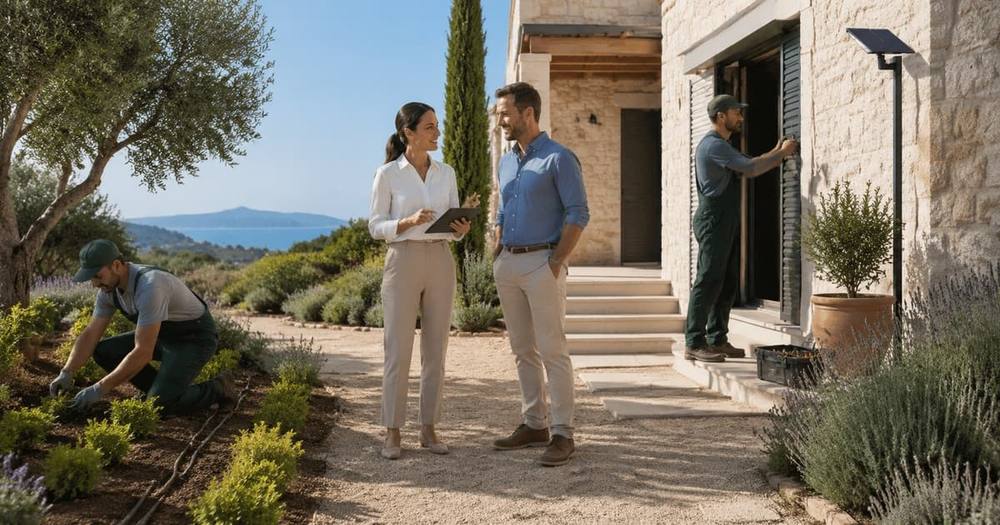
Owning a property in Chalkidiki should feel rewarding, not like a permanent list of unfinished tasks. Yet every villa, apartment, traditional house, garden, terrace, and pool requires regular attention. Small defects can develop while the owner is abroad. Coastal weather can affect exterior materials. Irrigation can fail during the hottest week of summer. A blocked drain, power interruption, leaking pipe, damaged shutter, fallen branch, or neglected air-conditioning system can quickly become an expensive problem if nobody is available to notice and respond.
Professional property maintenance is therefore more than arranging repairs after something breaks. It is a structured system of inspection, prevention, documentation, seasonal preparation, contractor coordination, and follow-up. Garden care is equally more than occasional mowing or pruning. A healthy, safe, and presentable Mediterranean garden requires irrigation oversight, plant knowledge, soil and water management, storm preparation, pest observation, fire-risk reduction, and a realistic maintenance plan for the way the property is used.
Chalkidiki Real Estate provides coordinated property maintenance and garden services in Chalkidiki for homeowners, international investors, holiday-home owners, and short-term rental properties. We act as a reliable local point of contact, arranging regular checks, preventive servicing, repairs, cleaning, garden and irrigation care, pool coordination, technical access, owner-arrival preparation, and emergency response within an agreed service package.
The service is tailored to the property. A compact apartment with a terrace requires a different plan from a large coastal villa with gardens, pool, guest house, gates, pumps, solar hot water, smart-home equipment, and several outdoor living zones. Our objective is to create a practical maintenance program that protects the property, supports comfortable use, and gives the owner clear information without requiring constant remote management.

Do you have questions about property maintenance and garden services in Chalkidiki or would you like to discuss your property personally? Contact me directly by phone, WhatsApp or email.
- Mobile: +30 693 470 9163
- WhatsApp: +30 693 470 9163
- Email: hb@chalkidikirealestate.com
- Location: Chalkidiki Real Estate
- LinkedIn: Hans-Jürgen Bahner – Over 17k Followers
- Bestselling Author: Find My Books Here
Personal support for international property owners in Chalkidiki and throughout Greece.
On this page
Select a topic to learn how our property maintenance and garden services work.
Complete Property Maintenance and Garden Services from One Local Company
Property maintenance involves many small but connected responsibilities. A gardener may notice damp near an exterior wall. A cleaner may find that a shutter no longer closes. A pool technician may observe a leak in the plant room. An air-conditioning technician may need access to a locked roof area. If these providers work independently and nobody maintains the overview, important information can be missed.
Our coordinated approach connects inspections, garden care, cleaning, pool support, technical servicing, repairs, and owner communication. We establish which tasks are routine, which require prior approval, who is authorized to enter the property, and how urgent issues should be escalated.
You can commission individual services or a complete management package. Some owners need only regular inspections and garden coordination. Others want the entire property prepared before each visit, including cleaning, linen, utilities, refrigeration, pool, garden, internet, air conditioning, and keys. Rental properties may require more frequent checks and a faster repair process between guests.
We use a property-specific checklist rather than treating every home the same. The checklist reflects the building, equipment, landscape, occupancy, season, and known risks. Findings are documented, assigned, and followed until resolved. Qualified electricians, plumbers, HVAC technicians, engineers, pool specialists, arborists, pest-control professionals, and other regulated providers remain responsible for their specialist work.
The result is one dependable local coordination point. Owners know who is monitoring the property, how often checks occur, what has been found, which actions are planned, and when a decision is required.
Why Preventive Maintenance Matters in Chalkidiki
Reactive maintenance begins after failure. Preventive maintenance seeks to identify wear, unusual behavior, and changing conditions before they interrupt use or cause further damage. It does not guarantee that nothing will ever fail, but it reduces avoidable risk and improves preparedness.
Chalkidiki properties face intense sunlight, high summer temperatures, seasonal rain, wind, humidity, insects, vegetation growth, and coastal exposure. Salt and dust can affect metalwork, windows, outdoor units, lights, gates, and pool equipment. Leaves can block drains. Irrigation can wash soil away or keep walls constantly wet. Shutters and doors may seize after months without use.
Vacancy increases the consequences of small problems. A slow leak may continue unnoticed. A power failure may stop pumps, refrigeration, security, internet, or irrigation. A fallen branch may damage a roof or block access. Condensation or poor ventilation may encourage mold.
Regular observation creates a baseline. When the person inspecting the property understands its normal condition, changes become easier to identify. Meter readings, equipment sounds, water pressure, plant condition, humidity, and surface staining can reveal developing issues.
Preventive maintenance also protects the renovation investment. Paint, sealants, timber coatings, air-conditioning, pumps, filters, irrigation, windows, doors, drainage, and landscaping all last longer when serviced at suitable intervals. A planned annual budget is normally easier to manage than repeated emergency expenditure.
Local Maintenance Support for International Property Owners
Owners who live abroad cannot visit the property whenever a technician needs access or a storm passes through the area. Even a simple repair can require several calls, translations, photographs, keys, appointments, invoices, and follow-up checks.
We provide the local operational layer. With the owner’s authorization, we can hold keys, arrange access, meet contractors, verify that the correct property and problem have been identified, document visible progress, and report completion. We do not approve major expenditure without the agreed authority, and we do not replace the professional judgment of qualified trades.
Communication is structured to avoid both silence and unnecessary messages. Routine inspection results can be summarized at agreed intervals. Urgent issues are communicated promptly. Decisions are presented with available information, photographs, quotations, and the consequences of delay where known.
Owners can define spending thresholds for routine minor actions and a separate process for emergencies. This allows small maintenance tasks to proceed efficiently while preserving owner control over significant work.
Local continuity is especially valuable when several providers are involved. We retain the service history, equipment details, contractor contacts, warranty information, and previous findings. The owner does not need to reconstruct the property’s technical history each time a problem occurs.
Initial Property and Garden Assessment
Before proposing a maintenance plan, we assess the property’s condition, systems, landscape, access, and intended use. This first review establishes priorities and identifies areas that require specialist assessment.
The building review may cover entrances, windows, shutters, visible roof and terrace areas, façades, drainage, interior rooms, plumbing fixtures, electrical panel condition, water heater, air conditioning, pumps, utility meters, internet equipment, security systems, appliances, storage, pool area, and signs of moisture, pests, or previous damage.
The garden review considers plant types, irrigation, soil, slopes, trees, palms, hedges, lawn, planters, paths, walls, drainage, lighting, water sources, fire-risk vegetation, and maintenance access. We also ask how the owner wants the garden to look, how frequently the property is occupied, and what level of water and labor is realistic.
Critical defects are separated from routine work. Active leakage, electrical hazards, unstable branches, failed railings, blocked wastewater, major irrigation loss, or insecure access require prompt professional attention. Cosmetic improvements can be planned after risks are controlled.
The assessment becomes the foundation of the property file and maintenance schedule. It records equipment, key locations, providers, known issues, and recommended actions. It is updated as work is completed and conditions change.
Regular Property Inspections and Condition Reports
Inspection frequency depends on property type, season, equipment, vacancy, exposure, and owner requirements. A large villa with garden and pool during summer requires a different schedule from a winterized apartment.
A routine visit may include checking access, visible security, unusual odors, signs of entry, water leaks, damp, ceilings, windows, shutters, plumbing fixtures, selected electrical systems, internet availability, refrigerators, air-conditioning status, utility meters, exterior drainage, terraces, garden condition, irrigation, pool surroundings, gates, and storm damage.
An inspection is observational and does not replace formal technical testing. Electrical safety, structural condition, roofing, hidden plumbing, gas, refrigerant systems, tree stability, and other specialist areas require qualified professionals.
Reports can include a concise status summary, dated photographs, meter information, completed routine actions, open items, and recommended next steps. The level of detail is agreed in the service plan. Repeated photographs from similar positions can help track cracks, moisture, planting, and surface condition over time.
After extreme weather, an additional visit may be appropriate. The objective is early detection: a broken shutter, displaced roof element, blocked drain, fallen branch, or failed pump is easier to manage before the next owner or guest arrives.
Interior Maintenance and Minor Repairs
Interior maintenance supports comfort, safety, and presentation. Typical tasks include coordinating repairs to doors, handles, locks, hinges, shutters, cabinets, taps, toilets, sealant, lighting, appliances, furniture, paint, and minor finish damage.
We first identify whether the task is a routine adjustment or a symptom of a deeper issue. A sticking door may result from hardware, humidity, settlement, or water damage. Peeling paint may indicate an active leak. Replacing sealant without correcting movement or moisture may provide only temporary improvement.
Minor work is grouped where practical to reduce repeated call-outs. A property checklist can collect loose handles, failed lamps, damaged screens, and touch-up areas for one coordinated visit. Specialist or safety-critical work is separated and assigned to qualified providers.
For furnished and rental homes, replacement items should match the existing standard or an agreed alternative. Photographs and product references help the owner approve visible changes. Spare lamps, batteries, filters, hardware, paint references, and commonly replaced parts can be organized in owner storage.
After repair, visible completion is checked, the area cleaned, and the property file updated. If the work exposes a larger problem, the owner receives a recommendation rather than an incomplete cosmetic solution.
Exterior Building and Terrace Maintenance
Exterior areas are exposed continuously and require routine review. Façades, roofs, gutters, downpipes, terraces, balconies, railings, stonework, pergolas, exterior timber, gates, lights, paths, drains, and outdoor furniture all age at different rates.
We monitor visible cracking, peeling coatings, failed sealant, corrosion, loose fittings, blocked drains, staining, settlement, damaged paving, unstable railings, worn timber finishes, and vegetation touching the building. Concerning structural or waterproofing signs are referred to the appropriate engineer or specialist.
Cleaning must suit the material. Aggressive pressure washing or chemicals can damage stone, grout, render, coatings, waterproofing, glass, and pool surroundings. The correct method should be selected for the surface and environmental conditions.
Coastal properties benefit from periodic removal of salt and dirt from suitable exterior metalwork, windows, shutters, and equipment according to manufacturer guidance. Hardware and drainage points should remain accessible.
Maintenance is coordinated with garden work. Irrigation should not spray façades or keep foundations wet. Plants should not obstruct air-conditioning units, meters, gates, windows, or service access. Exterior care is most effective when building and landscape teams share information.
Electrical, Plumbing, HVAC and Equipment Servicing
A maintenance plan should include the property’s technical systems. Electrical panels, air conditioning, heat pumps, water heaters, solar thermal equipment, pumps, tanks, filters, plumbing, drainage, appliances, gates, security, pool equipment, irrigation, and network systems all have service requirements.
We coordinate qualified technicians, property access, owner approval, service timing, and records. Regulated inspection, testing, repair, refrigerant work, electrical declarations, and technical certification remain with licensed professionals.
Seasonal timing matters. Air-conditioning should be serviced before peak summer demand, not after failure during a fully booked week. Drains and pumps should be reviewed before heavy rain. Solar hot-water systems, pressure equipment, and filters require attention according to condition and manufacturer guidance.
Service reports are retained where provided. They help track repeated faults, warranties, parts, and recommended future work. Equipment details and serial numbers reduce delays when a replacement component is needed.
Property inspections complement professional servicing by noticing changes between appointments. Unusual noise, water, heat, odor, vibration, corrosion, tripped circuits, error codes, or increased consumption are reported rather than ignored.
Water Monitoring, Leak Protection and Moisture Control
Water damage can develop quickly in an unattended home. Prevention begins with sound plumbing, accessible isolation valves, suitable pressure, maintained equipment, reliable drainage, and regular observation.
Inspections can include visible pipework, fixture connections, water heaters, pumps, tanks, ceilings, walls, cabinets, exterior taps, irrigation, and meter readings. Unusual consumption during vacancy may indicate leakage and requires professional investigation.
Leak sensors and automatic shut-off systems can add protection, especially near kitchens, bathrooms, utility rooms, heaters, and pump areas. They need power, connectivity, testing, manual override, and a defined response procedure. A remote alert has little value if nobody is assigned to attend.
Humidity and mold also require diagnosis. The cause may be leakage, rain ingress, condensation, poor ventilation, cold surfaces, or damp materials. Cleaning visible mold without correcting the cause is not a complete solution.
Our management plan can define who responds, how water is isolated, which plumber is contacted, what expenditure may be authorized, and how drying and restoration are coordinated. This reduces reaction time when an owner is abroad.
Key Holding, Security Checks and Contractor Access
Professional key management makes property maintenance possible without compromising security. We agree which keys, remotes, access cards, and codes are held, who may use them, and how access is recorded.
Routine visits include observing doors, windows, shutters, gates, locks, exterior lighting, and visible signs of entry or damage. We do not replace a qualified security assessment, but we can coordinate locksmiths, alarm providers, electricians, gate technicians, and camera specialists.
Contractors receive access only for agreed work. Where appropriate, we meet them, identify the task, protect private areas, and secure the property after departure. Owner belongings and sensitive documents should remain in locked storage.
Electronic locks and temporary codes can support rentals and service visits, but they require secure administration, manual backup, battery monitoring, and a clear offboarding process. Codes should not remain active indefinitely.
After a lost key, guest issue, or staff change, the owner may need cylinders, codes, or permissions updated. We coordinate the practical response and document the new access arrangement securely.
Cleaning, Housekeeping and Property Readiness
Cleaning supports both presentation and maintenance. A careful cleaner often notices leaks, insects, damaged furniture, failed lights, unusual odors, stains, or equipment problems before they become obvious elsewhere.
Services may include scheduled cleaning during vacancy, deep cleaning, post-maintenance cleaning, owner-arrival preparation, window cleaning, terrace care, linen coordination, laundry, inventory checks, and consumable setup. Rental turnover follows a more intensive timetable and checklist.
Products and methods should match surfaces. Natural stone, glass coatings, timber, stainless steel, outdoor fabrics, pool areas, and sensitive finishes require suitable care. Inappropriate chemicals can cause permanent damage.
During long vacancy, the home should not simply remain closed. Agreed ventilation, trap checks, dust and pest observation, textile protection, and periodic cleaning can help preserve the interior. The appropriate routine depends on humidity, security, and building systems.
Housekeeping findings are communicated through the same maintenance process. A damaged screen or dripping tap is not left as somebody else’s problem; it is recorded, assigned, and followed subject to owner approval.
Complete Garden Maintenance in Chalkidiki
A Mediterranean garden changes through the year. Growth, flowering, heat stress, irrigation demand, pruning, weeds, pests, storms, and seasonal dormancy require planned care. The aim is not constant visual perfection but a healthy, safe, and appropriate landscape.
A garden service can include routine visits, pruning, hedge shaping, lawn care, weed management, soil improvement, irrigation checks, leaf and debris removal, seasonal planting, tree observation, pest monitoring, path clearing, and removal of dead vegetation.
The maintenance standard is agreed with the owner. A formal garden, natural olive landscape, rental-villa garden, and low-water coastal planting each require different frequencies and techniques. Excessive pruning or watering can be as harmful as neglect.
We coordinate gardeners with irrigation technicians, arborists, pest-control professionals, landscapers, pool teams, electricians, and builders. Garden work should not damage cables, pipes, lights, waterproofing, paving, pool equipment, or neighboring property.
Reports focus on material changes: plant loss, irrigation failure, disease, unstable trees, erosion, damage, fire-risk vegetation, or work requiring owner decision. Routine growth and expected seasonal change are managed within the agreed program.
Planting Care, Pruning and Seasonal Garden Work
Different plants require different pruning times and methods. Olive trees, citrus, vines, flowering shrubs, hedges, herbs, ornamental grasses, palms, and climbing plants should not all be treated the same.
Pruning objectives include health, shape, clearance, fruiting, flowering, light, wind resistance, access, and fire-risk management. Repeated hard cutting can weaken plants, create dense regrowth, reduce flowering, and spoil natural character.
Seasonal work may include removing dead material, renewing mulch, improving soil, adjusting supports, dividing plants, replacing losses, controlling weeds, and preparing sensitive plants for heat or wind. New planting needs an establishment period with closer irrigation and monitoring.
Plants near buildings require special attention. Branches should not damage roofs or shutters. Climbing plants should not enter drains, equipment, or façade cracks. Dense growth should not obstruct meters, lights, air-conditioning, gates, or surveillance.
We maintain a practical plant-care record for significant specimens and recurring tasks. For valuable trees or uncertain health problems, we arrange assessment by a qualified arborist or appropriate plant specialist.
Lawn, Groundcover and Weed Management
Lawns can create attractive recreation areas but require significant water, mowing, feeding, aeration, pest observation, and irrigation accuracy during hot weather. Their size and maintenance level should match the property’s use and resources.
Routine care may include mowing at an appropriate height, edging, removing thatch, aeration, soil improvement, overseeding where suitable, irrigation adjustment, and targeted treatment of pests or disease by authorized providers.
Brown areas do not always mean insufficient water. Poor sprinkler coverage, compacted soil, fungal problems, pet damage, heat reflection, root competition, or irrigation leaks may contribute. Increasing watering without diagnosis can waste water and worsen disease.
Groundcovers, gravel, mulch, native planting, and mixed low-water landscapes may reduce lawn demand while preserving a green and designed appearance. Conversion should consider play, walking, erosion, fire risk, pool use, and maintenance.
We coordinate the owner’s visual expectations with water efficiency and realistic care. Weed management prioritizes prevention, manual or mechanical control, mulch, planting density, and lawful specialist treatment where necessary.
Irrigation System Inspection, Repair and Programming
Irrigation is the life-support system of many Chalkidiki gardens. A hidden fault can damage plants, waste water, stain façades, undermine paving, or remain unnoticed until an owner arrives.
We coordinate inspection of controllers, valves, filters, pressure, pumps, tanks, sprinklers, drip lines, zones, rain sensors, wiring, and visible leaks. Coverage and run times are reviewed against plant type, soil, exposure, season, and weather.
Spray should remain on planting rather than windows, walls, paths, roads, and pool areas. Drip irrigation must be checked because blocked or detached emitters are not always visible. Root growth and gardening work can damage buried lines.
Programming is adjusted seasonally. Frequent shallow watering may encourage weak roots, while excessive intervals can stress new plants. The correct strategy depends on species, soil, slope, and system design.
Smart controllers and remote monitoring can help, but they need reliable sensors, connectivity, maintenance, and local response. We keep zone information and controller instructions in the property file so future technicians can work efficiently.
Water-Efficient Mediterranean Garden Management
A water-efficient garden is designed and maintained to suit the climate rather than relying on constant irrigation. This does not mean a dry or neglected landscape. It means selecting appropriate plants, grouping them by water demand, improving soil, reducing evaporation, managing shade, and maintaining efficient delivery.
Mulch can reduce evaporation and weeds when selected and applied appropriately. Soil organic matter may improve water retention, while very compacted or poorly drained soil requires different intervention. Planting density and mature size affect shade and competition.
Native and climate-adapted plants often perform well, but every selection must still suit the specific site, exposure, salt, soil, and maintenance level. Newly planted drought-tolerant species require establishment watering.
Water efficiency also depends on avoiding leaks, repairing broken emitters, watering at suitable times, responding to rainfall, and separating lawn from lower-demand zones. Pool overflow, greywater, wells, or collected water may involve technical, hygiene, and legal considerations that require specialist review.
We help owners move toward a resilient garden gradually, preserving valued plants and outdoor use while reducing unnecessary water and emergency care.
Tree, Palm and Large-Plant Care
Mature trees provide shade, privacy, landscape value, and cooling, but they also require professional observation. Dead branches, cavities, root damage, leaning, soil changes, storms, pests, or inappropriate pruning can increase risk.
Routine gardeners can manage suitable small work, while climbing, large branches, uncertain stability, protected species, power lines, roads, structures, and complex pruning require a qualified arborist and appropriate equipment.
Tree work is planned around safety, access, nesting wildlife, property boundaries, waste removal, and any required permission. Topping or indiscriminate cutting can create hazardous regrowth and permanently damage form.
Palms require species-specific care and observation for pests, damaged crowns, dead fronds, irrigation, and stability. Work at height should never be improvised.
We coordinate assessment, owner approval, safe access, neighboring communication where necessary, debris removal, and follow-up. Significant trees can be recorded with photographs so changes are visible over time.
Garden Pests, Plant Disease and Responsible Treatment
Yellowing, leaf loss, dieback, spots, insects, poor growth, and wilting can result from pests, disease, irrigation, nutrient imbalance, root damage, heat, wind, salt, or unsuitable soil. Correct identification should precede treatment.
We coordinate plant specialists or authorized pest-control providers where necessary. Treatment options should consider effectiveness, legal use, pets, children, guests, pollinators, water, neighboring properties, and timing.
Good garden management reduces some problems through healthy soil, appropriate watering, air circulation, sanitation, pruning, resistant plants, and early removal of affected material. Repeated blanket chemical use is not a substitute for diagnosis.
Indoor pest issues may also require licensed professional treatment. Access points, food, moisture, drains, vegetation contact, and waste management should be addressed alongside treatment.
Applications, restrictions, re-entry periods, and safety instructions provided by the professional are followed and communicated to the owner, cleaners, guests, and garden team as relevant.
Vegetation Clearance and Fire-Risk Management
Dry vegetation, unmanaged plots, dead branches, accumulated leaves, and combustible material can increase fire risk. Garden maintenance in Chalkidiki should therefore include seasonal review of vegetation around buildings, access routes, boundaries, equipment, and neighboring land.
Risk reduction may include removing dead material, managing grasses and weeds, pruning selected vegetation, separating combustible storage, clearing drains and roofs, maintaining vehicle access, and ensuring gates and water points can be reached. The correct approach depends on the property and should avoid damaging protected habitat or creating erosion.
Greek authorities operate an official plot-cleaning declaration process, and deadlines and obligations can change each year. Owners must verify whether their property is covered and what action and declaration are required for the current period. A gardener’s visit does not automatically complete an owner’s administrative obligation.
Burning garden waste or using tools that create ignition risk may be restricted or prohibited depending on season and conditions. Current Civil Protection and local authority instructions must be followed.
Important: Fire prevention is a safety and regulatory matter. We can coordinate vegetation work and documentation support, but the owner remains responsible for confirming current legal duties, deadlines, declarations, and restrictions for the specific property.
Pool Coordination and Outdoor Living-Area Maintenance
Pool areas require coordinated technical, cleaning, and garden care. Water quality, pumps, filters, dosing, circulation, leaks, covers, lighting, paving, drains, showers, furniture, shade, and planting all affect operation.
Qualified pool specialists remain responsible for water treatment and technical servicing. We coordinate visits, access, reports, repairs, and communication with the owner or rental team. Unusual water loss, noise, pressure, staining, equipment heat, or electrical concerns are escalated.
Surrounding surfaces are kept clear and cleaned with methods appropriate to stone, tile, grout, waterproofing, and pool chemistry. Slip hazards, loose coping, broken drains, unstable furniture, and failed lights are recorded.
Planting near pools should limit excessive debris, thorns, aggressive roots, and irrigation overspray. Garden and pool teams coordinate so that fertilizer, soil, and cuttings do not contaminate the water.
Before owner or guest arrival, the pool area can be prepared, furniture arranged, showers tested, lighting checked, and visible maintenance completed. Safety remains an ongoing responsibility and no maintenance visit replaces supervision or property-specific safety measures.
Your local contact in Chalkidiki
Get in Touch with Hans-Jürgen Bahner
Do you have questions about property maintenance and garden services in Chalkidiki or would you like to discuss your property personally? Contact me directly by phone, WhatsApp or email.
- Mobile: +30 693 470 9163
- WhatsApp: +30 693 470 9163
- Email: hb@chalkidikirealestate.com
- Location: Chalkidiki Real Estate
- LinkedIn: Hans-Jürgen Bahner – Over 17k Followers
- Bestselling Author: Find My Books Here
Personal support for international property owners in Chalkidiki and throughout Greece.
Storm, Wind and Extreme-Weather Preparation
Strong wind and heavy rain can affect shutters, awnings, furniture, branches, drains, roofs, pergolas, gates, electricity, pumps, and internet. Preparation reduces preventable damage.
Before forecast severe weather, agreed actions may include securing furniture and loose items, retracting suitable awnings, checking shutters and gates, clearing accessible drains, protecting equipment, and reviewing vulnerable trees. Work is performed only when conditions are safe.
After the event, an inspection can check access, visible roof and façade areas, water ingress, terraces, drainage, power, pumps, garden damage, fallen branches, pool contamination, fences, and neighboring impacts.
Hazardous trees, electrical damage, structural movement, flooded equipment, and roof access require qualified professionals. Staff should not enter unsafe areas merely to provide photographs.
Owners receive a concise report with urgent actions and recommended follow-up. Emergency stabilization may be coordinated before permanent repair, subject to safety and availability.
Opening the Property for Spring and Summer
Seasonal opening is more than unlocking the door. Systems that have remained idle should be returned to operation in a planned sequence before owners or guests arrive.
Preparation may include a property inspection, deep cleaning, ventilation, water restoration, leak checks, hot-water review, electrical and internet checks, air-conditioning servicing, appliance testing, pest observation, drain and trap checks, pool preparation, irrigation adjustment, garden cleanup, furniture placement, screens, shutters, gates, lighting, linen, and consumables.
Technical faults are easier to resolve when discovered weeks before arrival rather than on the first day of a holiday. We therefore agree the opening date and priorities early enough to allow specialist appointments and parts.
Exterior spaces receive particular attention. Winter debris is removed, drains checked, damaged plants assessed, paths cleared, furniture cleaned, and shade equipment reviewed.
A final readiness check confirms visible condition and open items. The owner knows what is complete and whether any non-critical work will continue after arrival.
Closing and Preparing the Property for Winter
Closing a seasonal home protects it during reduced occupancy. The correct process depends on location, building systems, humidity, water arrangements, security, and planned inspection frequency.
Tasks may include cleaning, food removal, refrigeration decisions, linen protection, waste removal, water isolation or system-specific preparation, appliance shutdown, hot-water and solar-system review, air-conditioning settings, leak sensors, shutters, locks, alarms, internet equipment, outdoor furniture, awnings, irrigation, pool, garden, drains, and storm readiness.
Not every system should simply be switched off. Pumps, security, routers, humidity control, frost protection, remote sensors, or pool equipment may need to remain active. Qualified technicians advise on their equipment.
The garden is prepared through suitable pruning, weed and dry-material management, irrigation adjustment, staking, drainage clearance, and protection of sensitive plants. Excessive late cutting can cause damage and should be avoided.
During winter, scheduled inspections confirm that the closing strategy continues to work. Any change in power, moisture, security, or weather damage is reported.
Owner Arrival and Departure Services
Arrival preparation allows owners to begin their stay comfortably. The property can be cleaned, aired, supplied, and checked according to a personalized checklist.
Services may include beds and linen, towels, kitchen basics, refrigeration, water and hot water, air conditioning, internet, lighting, shutters, pool and garden presentation, terrace furniture, keys, access codes, and collection of agreed deliveries.
Special requests are arranged in advance where possible. The owner receives confirmation and notice of unresolved issues. Privacy and access preferences are respected.
Departure services can include cleaning, laundry, waste removal, inventory observation, damage reporting, system settings, closing, security, furniture storage, and activation of the vacancy inspection plan.
These services connect housekeeping with maintenance. A departure observation may identify a leaking tap, damaged chair, or failing appliance early enough for repair before the next visit.
Property and Garden Maintenance for Airbnb Rentals
Short-term rental properties experience intensive and variable use. Doors, locks, air conditioning, hot water, appliances, furniture, pools, irrigation, and gardens must remain reliable through repeated guest stays.
Maintenance planning begins before the season. Critical systems are serviced, spares organized, instructions simplified, and response contacts confirmed. Durable, replaceable products reduce downtime.
Between guests, cleaning and inspection teams look for damage, leaks, missing items, blocked drains, equipment faults, garden hazards, pool-area issues, and signs that require technical attention. Findings are prioritized against the next arrival time.
Guest reports are assessed without assuming either misuse or equipment failure. We gather symptoms, arrange access, coordinate the appropriate provider, and keep communication with the owner or rental manager clear.
Garden and pool schedules are planned around occupancy so noisy or intrusive work is minimized. At the same time, maintenance cannot be delayed until conditions decline. A professional operating rhythm protects reviews, guest comfort, and asset condition.
Repair Management and Contractor Coordination
Finding a contractor is only the first step. The problem must be described, access arranged, quotations clarified, owner approval obtained, work followed, and completion checked.
We coordinate electricians, plumbers, HVAC technicians, builders, painters, carpenters, locksmiths, window specialists, appliance technicians, pool teams, irrigation providers, gardeners, arborists, cleaners, and pest-control professionals according to the task.
For larger work, the scope identifies materials, labor, exclusions, access, protection, waste, timing, payment, and warranties. Technical design and permit requirements are referred to architects or engineers.
Changes are communicated before execution where possible. Emergency action may be necessary to protect people or property within the agreed authority. Temporary repair is documented and followed by a permanent-solution proposal.
After work, the area is secured and cleaned, visible completion documented, and invoices and service information added to the property file. Repeated faults are reviewed rather than treated as unrelated call-outs.
Emergency Maintenance and Local Response
Emergencies can include active leaks, electrical faults, blocked wastewater, loss of water, failed pumps, storm damage, insecure doors, fallen branches, cooling failure during extreme heat, or equipment affecting guest safety.
The response process begins with safety. Guests and staff should not enter flooded electrical areas, touch exposed wiring, climb unstable roofs, handle dangerous branches, or operate unfamiliar equipment.
We gather available information, arrange safe access, contact the appropriate professional, inform the owner, and coordinate immediate damage limitation. Response time depends on location, severity, weather, traffic, technician availability, and parts. No responsible service can promise that every specialist will be instantly available.
Owner agreements define emergency contacts, insurers, spending authority, preferred providers, access, and communication. This preparation allows faster action when the owner is unreachable.
After stabilization, we coordinate diagnosis, permanent repair, drying, cleaning, restoration, documentation, and any preventive changes recommended by the professional.
Transparent Reporting, Approvals and Maintenance Budgets
Owners need visibility without being overwhelmed by every routine task. We agree a reporting structure that distinguishes normal maintenance, monitored issues, recommendations, urgent action, and owner decisions.
Reports may include inspection status, photographs, completed work, garden observations, meter readings, upcoming services, quotations, invoices, and open actions. The format and frequency depend on the package.
Routine recurring services are budgeted separately from repairs and improvements. Owners can define approval thresholds for minor work and require quotations for larger tasks. True emergencies follow the authority agreed in advance.
A planned annual maintenance calendar helps distribute cost. Air-conditioning servicing, exterior cleaning, garden seasonal work, irrigation review, pool opening, storm preparation, and selected technical inspections can be scheduled before peak demand.
Unexpected expenditure remains possible, particularly in older properties. Transparent records help identify patterns and decide whether repeated repairs should be replaced by a system upgrade.
Creating a Property-Specific Maintenance Plan
No two properties require the same plan. We build the schedule around the building, garden, equipment, occupancy, owner expectations, budget, rental use, and risk profile.
The plan identifies inspection frequency, seasonal tasks, professional service intervals, garden visits, irrigation review, cleaning, pool coordination, arrival and departure procedures, key management, emergency authority, reporting, and owner approvals.
Tasks are divided into routine, condition-based, seasonal, statutory or professional, and emergency categories. This prevents important work from depending on memory.
The plan remains flexible. A newly renovated property may need warranty follow-up. New planting requires intensive establishment care. A change from private use to Airbnb alters inspection and response needs. Repeated drought or storm conditions may require garden and drainage adjustments.
At least annually, the owner and manager should review performance, costs, recurring faults, contractor quality, equipment age, garden condition, and upcoming investment. Maintenance then becomes part of long-term asset planning rather than a series of isolated expenses.
Our Step-by-Step Maintenance Process
1. Free initial consultation
We discuss the property, occupancy, garden, pool, technical systems, current concerns, and level of support required.
2. Property assessment
We inspect the accessible building and exterior, record key systems, identify priorities, and recommend specialist assessment where necessary.
3. Customized service plan
Inspection frequency, routine tasks, garden schedule, reporting, access, approvals, emergency authority, and seasonal services are defined.
4. Initial corrective work
Urgent defects and overdue servicing are coordinated so the property enters routine management from a stable condition.
5. Scheduled inspections and garden care
Visits follow the agreed checklist. Findings are documented and routine authorized work is completed.
6. Repairs and specialist services
We obtain quotations where required, arrange qualified providers, coordinate access, and follow completion.
7. Seasonal preparation
Opening, summer readiness, storm preparation, winter closing, and owner-arrival services are scheduled in advance.
8. Reporting and annual review
Owners receive agreed updates, while recurring issues, costs, service quality, and future improvements are reviewed periodically.
Why Choose Chalkidiki Real Estate?
- Reliable local presence: We inspect, coordinate access, meet providers, and respond when international owners cannot be present.
- One point of contact: Building maintenance, garden care, cleaning, pool support, repairs, and seasonal services are connected.
- Property-specific checklists: The service reflects your building, equipment, landscape, occupancy, and known risks.
- Clear English communication: Reports, photographs, approvals, quotations, and recommendations are organized for international clients.
- Preventive approach: We look for developing issues instead of waiting for visible failure.
- Qualified specialists: Regulated and technical work remains with appropriate electricians, plumbers, engineers, HVAC providers, arborists, pest-control professionals, and other specialists.
- Transparent authorization: Routine limits, quotations, emergency authority, and owner decisions are agreed in advance.
- Rental experience: Maintenance can be aligned with Airbnb turnovers, guest stays, cleaning, check-in, and rapid repair needs.
- Long-term continuity: Service records, equipment details, garden history, contractors, warranties, and recurring issues remain organized.
Our objective is simple: to keep your property safe, presentable, functional, and ready for use while protecting its long-term value. You retain control without having to manage every local appointment yourself.
Frequently Asked Questions
Can you inspect my property while I am outside Greece?
How often should my property be inspected?
What is included in a routine property inspection?
Do you provide complete garden maintenance?
Can you repair irrigation systems?
Can you arrange tree and palm work?
Can you clear vegetation for fire prevention?
Do you also coordinate pool maintenance?
Can you prepare the home before we arrive?
Can you close the house after our departure?
Can you manage repairs and technicians?
Do you provide emergency assistance?
Can you maintain an Airbnb property?
Will I receive photographs and reports?
Can you approve repairs without contacting me?
How much do property and garden services cost?
Do you have questions about property maintenance and garden services in Chalkidiki or would you like to discuss your property personally? Contact me directly by phone, WhatsApp or email.
- Mobile: +30 693 470 9163
- WhatsApp: +30 693 470 9163
- Email: hb@chalkidikirealestate.com
- Location: Chalkidiki Real Estate
- LinkedIn: Hans-Jürgen Bahner – Over 17k Followers
- Bestselling Author: Find My Books Here
Personal support for international property owners in Chalkidiki and throughout Greece.
Continue the Property Management Cluster
Regular maintenance connects with technical systems, outdoor areas, renovation and rental operation. Use these connected pages to plan year-round property care.