
Property for Sale in Polichrono, Chalkidiki
1 property listed today, from €230,000 to €230,000.
Polichrono sits on the east coast of Kassandra, roughly halfway down the peninsula, with Kriopigi on one side and Hanioti on the other. Its defining feature is a long, wide sandy beach that runs the full length of the settlement, and behind that beach the ground rises into low slopes that carry most of the sea-view housing. That simple geography, a flat coastal strip in front and a rising hinterland behind, is what buyers are really choosing between when they look at property for sale in Polichrono.
The village has grown as a family resort rather than a nightlife resort. It fills in July and August, but its register stays calmer than the two busiest addresses further south, and that pulls a particular kind of visitor: couples with children, returning guests, longer bookings. For owners that has consequences. It shapes which floor plans let easily, how long the letting window really is, and which properties keep their value when the market slows.
This guide describes what genuinely exists in Polichrono, how the beach strip differs from the slopes above it, what the village is like once the season ends, which legal and technical checks matter most in a resort built quickly during the tourism decades, what ownership costs after completion, and how Polichrono compares with the Kassandra villages that most buyers shortlist beside it.
Listings
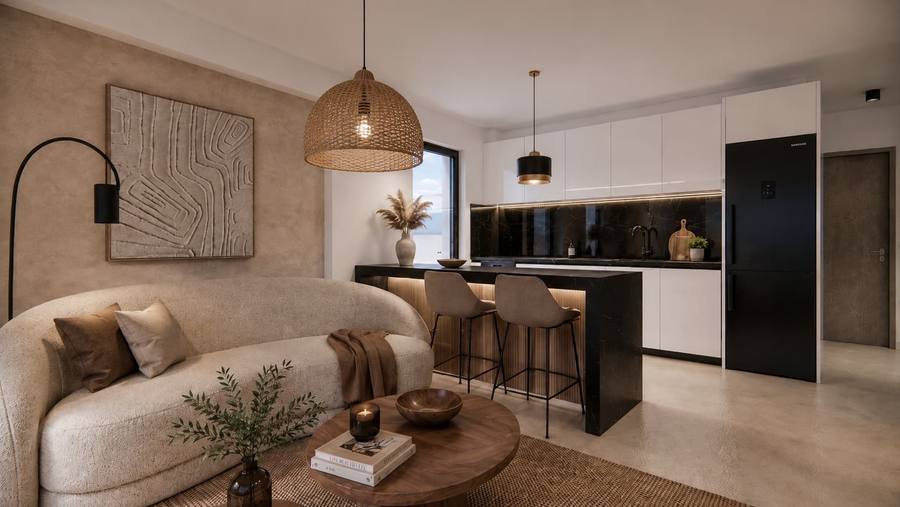
Nothing matches this search. Tell us what you are looking for — a large part of our stock is off-market.

Do you have questions about property for sale in Polichrono or would you like to arrange a viewing? Contact me directly by phone, WhatsApp or email.
- Mobile: +30 693 470 9163
- WhatsApp: +30 693 470 9163
- Email: hb@chalkidikirealestate.com
- Location: Chalkidiki Real Estate
- LinkedIn: Hans-Jürgen Bahner – Over 17k Followers
- Bestselling Author: Find My Books Here
Personal support for international property buyers in Chalkidiki and throughout Greece.
Select a topic to understand the Polichrono property market and prepare your search.
Off-Market Properties in Polichrono
In Polichrono, as across Chalkidiki, many homes sell before they are ever advertised - privately, through local contacts. Through our local network in Kassandra we source off-market properties before they reach the portals. Tell us your budget and requirements, and we will shortlist matching options for you.
- Local team based in Chalkidiki - viewings within days
- We speak English, German, Russian and Greek
- Free, non-binding consultation
Polichrono Property Market: Overview
Polichrono is one of the established coastal settlements of the Kassandra peninsula, and its housing stock reflects several decades of steady tourism growth rather than one building boom. The result is a layered market: older holiday houses from the early resort years, apartment blocks built for summer letting, newer maisonette schemes on the edges of the settlement, individual villas on the slopes, and building parcels of land both within the approved settlement boundary and beyond it.
Because these products were built for different purposes at different times, they behave differently as assets. A studio two streets from the sand and a detached house on the hill are not competing for the same buyer and will not perform the same way in a slow year. Understanding which of these sub-markets you are actually shopping in is the first useful step.
Why Buyers Choose Polichrono
Most people who buy here have already holidayed on this stretch of coast. They come back because the beach is long enough that it never feels compressed, the walk from the housing to the sand is short, and the village keeps a domestic scale even at peak season. That combination is unusual on the east coast, where several settlements are either far more built up or much smaller and quieter.
The second reason is practical. Polichrono sits close enough to the top of the peninsula that arrival and departure are manageable, and close enough to the busier resorts that guests and family members can find whatever the village itself does not offer. Buyers describe it as a base rather than a destination, and that is a fair summary of what ownership here feels like.
Where Polichrono Is and How You Reach It
The village lies on the main east-coast road of Kassandra. Everything arrives through the neck of the peninsula, so the drive from the airport is a single, straightforward route with one bridge crossing at Potidea and then a coastal run south past Nea Fokea. The figures below are approximate road distances and should be treated as planning guidance, not precise timings.
| From Polichrono to | Approximate road distance | Typical driving time |
|---|---|---|
| Thessaloniki Airport (SKG) | about 90 km | around one hour and 15 minutes |
| Thessaloniki city centre | about 105 km | around one hour and 30 minutes |
| Nea Moudania | about 35 km | around 35 minutes |
| Kassandreia (local administrative centre) | about 18 km | around 20 minutes |
| Kriopigi | about 4 km | around 7 minutes |
| Hanioti | about 4 km | around 7 minutes |
| Pefkohori | about 9 km | around 12 minutes |
| Kalithea | about 12 km | around 15 minutes |
For owners who fly in several times a year, the airport figure is the one that shapes daily life. An early flight still leaves a usable afternoon on the beach, and a late departure does not require an overnight stay near Thessaloniki.
The Village and Its Summer Rhythm
Polichrono has a recognisable seasonal curve. It wakes slowly in May, fills through late June, runs at capacity for roughly six weeks, then empties quickly once the Greek holiday period closes. The centre is compact: a cluster of tavernas, bakeries, mini markets, a pharmacy and seasonal shops within a few streets of each other, and a beach road that carries most of the evening activity.
What visitors notice is that the noise stays close to the seafront. Two or three streets inland the village is quiet even in August, which is why so many owners choose a property slightly back from the water and simply walk down. That pattern is worth testing yourself before you commit to a specific street.
The Beach and the Seafront Strip
The beach is the reason Polichrono exists in its current form. It is a long, shallow-entry sand beach with organised sections in front of the hotels and bars and quieter stretches at either end, particularly towards the boundary with Hanioti. Shallow water and gentle gradients are precisely why families keep returning, and that in turn is why the letting season here is dominated by week-long family bookings rather than short weekend stays.
For property purposes, the strip closest to the sand behaves as its own micro-market. Supply is finite, turnover is slow, and prices reflect scarcity rather than build quality. Buyers should separate the value of the position from the value of the building standing on it.
The Slopes Behind the Village
Behind the coastal strip the land rises into low hills covered in pine and scrub. This is where most of the genuine sea-view housing sits, and it is a very different ownership experience from the seafront. Plots are larger, gardens are possible, evening temperatures drop earlier, and the outlook is over the roofs of the village towards the Toroneos gulf.
The trade-offs are equally real. Access roads on the slopes vary from properly surfaced to compacted gravel, gradients can be steep enough to matter in winter rain, and everything requires a car. A hillside house is quieter and cooler; a beach-strip apartment is more convenient and lets more easily. Very few properties are both.
Micro-Locations Within Polichrono
In practice the settlement divides into four zones. The seafront strip and beach road; the compact village core one to three streets inland; the newer residential edges spreading north towards Kriopigi and south along the coast road; and the hillside plots above the settlement. Each has a distinct price profile and a distinct buyer.
What a Family Resort Means for Owners
The family profile of Polichrono has direct consequences for what you should buy. Two separate bedrooms let far better than one large one plus a sofa bed. A second bathroom moves a property up a bracket in guest terms. Ground-floor units with a shaded terrace and a step-free path outperform upper floors without a lift. Storage for buggies, beach equipment and bicycles matters more here than a designer kitchen.
It also means the letting calendar is compressed and predictable. Families book around school holidays, stay longer, and return. Owners who buy a layout that suits couples only are competing in a thinner segment of the same market and usually discover it in their second season.
Polichrono Compared with Its Neighbours
Most buyers shortlist Polichrono alongside two or three other Kassandra villages, so it is worth being blunt about the differences. Pefkohori is larger and considerably more commercial in the evening. Hanioti has a denser resort centre and a stronger nightlife draw. Kriopigi sits higher and offers views but a shorter beach frontage.
Further afield, Afitos trades on preserved stone architecture and a clifftop position rather than beach access, and Paliouri at the southern end is quieter and more remote. Polichrono sits in the middle of that spectrum, which is exactly why it appeals to buyers who want beach convenience without a resort centre outside their window.
Polichrono Outside the Season
Be honest with yourself about winter. From November to March a large share of the seasonal businesses close, the beach road is empty, and the village population falls back to its permanent residents. A bakery, a mini market and a taverna or two usually stay open, but the choice narrows sharply. Larger year-round provision is a short drive away, including the spa village of Agia Paraskevi Loutra and the administrative centre at Kassandreia.
For holiday owners this is irrelevant. For anyone planning to live here permanently or to spend long shoulder-season periods, it is the single most important thing to experience before buying. Visit in February.
Shops, Healthcare and Everyday Services
Day-to-day shopping is well covered in season and adequate out of it. Supermarkets, pharmacies, bakeries, fuel and banking services are available within Polichrono or within a short drive along the coast road towards Kalithea and Kassandreia. Primary healthcare is handled by local practices and the regional health centre, with hospital care in Thessaloniki.
Schooling for permanent residents is organised at the municipal level rather than village by village, so families relocating should confirm current arrangements and school transport before committing. International schooling options are concentrated around Thessaloniki, which is a genuine constraint for year-round family relocation to the peninsula.
What Actually Comes to Market Here
Listings in Polichrono are dominated by holiday apartments and maisonettes, followed by detached houses of varying age and a steady trickle of plots. Genuine first-line property changes hands rarely. Large modern villas with pools exist but are a small share of the total, and most of them sit on the slopes rather than near the sand.
A substantial part of the stock was built between the 1980s and the mid-2000s for seasonal use. That is not a defect, but it does mean thin insulation, older wiring, single glazing and flat roofs are common. Anyone browsing property for sale across Chalkidiki will find the same pattern in every resort village of this generation.
Price Levels and What Moves Them
As orientation only, Spitogatos asking-price data for the second quarter of 2026 put Kassandra at roughly 2,895 euros per square metre, Sithonia at roughly 3,000 euros and the Kallikratia area at roughly 2,513 euros. These are advertised prices across whole regions, not achieved prices in one village, and the spread inside Polichrono alone is wide. Our Chalkidiki property market report explains where those numbers come from and how far they can reasonably be pushed.
Locally, the strongest price drivers are how far you are from the sand, how secure the outlook is, how much land comes with a hillside house, the build year, and whether the outdoor space is legally covered by the permit. Renovation quality matters less than buyers expect, because a resort-era shell can be brought up to standard predictably. Position cannot be changed at any price.
Rental Demand and the Shape of the Season
Letting in Polichrono is concentrated between late June and early September, with a usable shoulder either side in good years. Gross yield figures circulating for Chalkidiki as a whole sit in a band of roughly 5.4 to 7.5 per cent, but that range rests on a thin and inconsistent data base and should never be treated as a forecast for one specific apartment.
Realistic planning starts from occupied weeks, not annual percentages. Count the weeks you would let, deduct the weeks you want for yourself, then subtract cleaning, linen, commission, utilities and management. Owners who intend to let should read our guide to property management in Chalkidiki before they buy, not after.
Building Plots Around Polichrono
Plots come in two legally distinct categories, and the difference decides everything. Land inside the approved settlement boundary carries defined building coverage and height limits and is comparatively straightforward. Land outside the boundary is governed by the rules for out-of-plan construction, where minimum plot size, road frontage and access rights determine whether anything can be built at all.
Slope plots above Polichrono frequently sit in the second category, which is why apparently cheap land with a spectacular outlook can turn out to be unbuildable. Commission a civil engineer's opinion before you sign anything. Our guide to land and building plots in Chalkidiki explains the categories in detail.
Apartments and Maisonettes
Apartments are the volume product in Polichrono, ranging from compact studios in older blocks to two-bedroom units in recent developments with shared pools. Maisonettes on two levels are common on the residential edges and suit families who want separation between sleeping and living space without maintaining a whole house.
In a multi-unit building, check the building regulations, the shared-cost arrangements, who controls the roof and whether short-term letting is permitted by the co-ownership agreement. Comparable considerations apply across the region and are covered in our overview of apartments for sale in Chalkidiki.
Detached Houses and Villas
Detached property in Polichrono divides between older family houses in and around the village core and newer builds on the slopes with gardens, terraces and in some cases a private pool. The older houses often occupy generous plots inside the settlement, which can be their real value even when the building itself needs work.
A pool changes the running cost profile of a house significantly: water, chemicals, pump electricity, winterising and a maintenance contract. It also widens the guest pool if you let. Our complete buyers guide to villas in Chalkidiki covers the technical and legal side of pools and outdoor structures.
Buying for the View
Sea view is the most frequently overpaid attribute in any coastal market, because it is easy to photograph and hard to guarantee. In Polichrono the risk is specific: much of the hillside outlook passes over lower plots that are themselves buildable. A view that exists today can be reduced by a neighbour's permit tomorrow.
The defence is documentary rather than visual. Establish what the plots between you and the water are zoned for, what heights are permitted, and whether anything is already in the permit pipeline. Ask an engineer to read the plot ratios rather than trusting the photographs or the terrace you are standing on.
First-Line Property on the Beach Road
Property directly on the beach road is the scarcest category in Polichrono and the one buyers most often romanticise. The advantages are obvious. The costs are less obvious: salt corrosion on railings, frames and air-conditioning units, sand ingress, noise from the beach bars until late in August, and restricted parking during the peak weeks.
There is also a legal dimension. The foreshore and beach zone is public land under Greek law, and any structure, terrace or paved surface extending towards it needs to be checked against the demarcated boundary. Encroachments inherited from previous owners become your problem at the moment you sign.
New Build and Off-Plan
New construction in Polichrono tends to appear as small maisonette clusters on the residential edges or as individual houses on slope plots. Buying before completion can secure a better price and a choice of unit, but it transfers risk from the developer to you, and Greek off-plan practice varies considerably between builders.
Insist on staged payments tied to verified construction milestones, a written specification with named materials, a completion date with consequences attached, and independent supervision by your own engineer. The rules and the safeguards are set out in our guide to off-plan and new-build purchases in Greece.
Renovating Resort-Era Stock
A large share of Polichrono housing was built for six weeks of summer use, and renovation here usually means correcting that assumption. The recurring items are roof waterproofing, external insulation, replacing single glazing with insulated units, rewiring to current standards, upgrading bathrooms and adding heating that works in January rather than just air conditioning that works in August.
Costs are predictable once an engineer has surveyed the property, and unpredictable if you rely on a builder's verbal estimate. Confirm before purchase which works require a permit, whether any past alteration was carried out without one, and how any legalisation of past works would be handled and priced.
Buying a Holiday Home in Polichrono
The classic Polichrono purchase is a second home used for four to eight weeks a year and let for part of the remainder. That model works well here because guest demand matches the same weeks that owners typically want, which forces a decision: keep August for yourself and accept lower income, or let the peak and holiday in June.
Practical details matter more than square metres. Secure storage for beach gear, shutters you can close remotely, a reliable key-holder, and a layout that survives being handed between guests. Our guide to buying a holiday home in Greece covers the ownership routine in full.
Living in Polichrono All Year
Permanent residence in Polichrono is entirely feasible and a small number of international owners do it, but it is a different proposition from the summer version of the village. You will need a car, a heating solution, a plan for winter services and a tolerance for a quiet six months. In exchange you get an empty beach, mild weather and very low living costs outside the season.
Anyone weighing this up should read our broader account of living in Chalkidiki, which sets out registration, healthcare, driving and the practical rhythm of the year on the peninsula.
Retiring to Polichrono
For retired buyers the appeal is a level village, short walking distances, a gentle beach and a climate that allows outdoor life for most of the year. The considerations are healthcare access, distance to hospital services in Thessaloniki, and whether a hillside property with steps and a steep drive will still suit you in fifteen years.
Tax residence and pension treatment are decided by your circumstances and by the current bilateral arrangements, not by the property, so take advice before you move rather than after. Our guide to retiring in Greece outlines the questions to put to an adviser.
Buying as an Investment
As a pure investment, Polichrono offers a clear and narrow proposition: strong, reliable summer demand from a family audience, and very little demand outside it. That suits an owner who wants a straightforward seasonal letting operation. It does not suit anyone hoping for year-round income or corporate lets, which are simply not present in this village.
Model the numbers on occupied nights at realistic rates, include a vacancy allowance, and treat capital growth as a possibility rather than a plan. The properties that hold value best here are the ones a future buyer will also want to use personally, which usually means position, outdoor space and two proper bedrooms.
Golden Visa and Polichrono
Chalkidiki falls within the 400,000 euro threshold band used by the Greek residence-by-investment programme, not the higher 800,000 euro band that applies to the main metropolitan and island zones. The rules also set a minimum property size, generally require a single qualifying property, and prohibit short-term letting of the property used to qualify. Law 5275/2026 introduced further changes during 2026.
Ownership and residence rights are separate matters, and the conditions that apply are those in force in the year you sign. Verify the current position for your own case with our overview of the Greek Golden Visa and the selection of qualifying properties.
Writing a Search Brief That Works
The briefs that produce results in Polichrono are specific about trade-offs rather than long on adjectives. State your total budget including purchase costs, the number of separate bedrooms you actually need, whether you require a garden or accept a terrace, your maximum acceptable walking distance to the sand, and whether you will let.
Then rank those criteria. In a village this compact, almost every property forces a choice between proximity to the beach and space around the building. A buyer who has decided in advance which of the two wins will see the right shortlist. A buyer who has not will view for two years.
Legal Due Diligence
Appoint a Greek lawyer who is independent of the seller and the agent, engaged and paid by you, before any money moves. The notary in a Greek transaction is a public official who ensures the deed is validly executed. The notary is not your adviser and does not act in your interest against the seller.
The lawyer's work covers title history at the land registry and cadastre, mortgages and charges, inheritance chains, boundary agreement, forestry and coastal designations, and whether the building as it stands matches the permit that authorised it. Our guide to legal due diligence in Greece lists the searches in order.
Technical and Structural Checks
Commission a civil engineer independently of the seller and the agent. In Polichrono the recurring findings are enclosed balconies and roof terraces that were never permitted, basements converted into habitable rooms, extensions added during the resort decades, and pools or pergolas that do not appear on the approved drawings.
Every one of these has a resolution path, either legalisation under the applicable framework or removal, and every one has a cost. Establishing that cost before the price is agreed converts a nasty surprise into a negotiating position. The engineer should also report on reinforcement corrosion, damp and roof condition.
Coastal and Environmental Factors
Polichrono faces east across the Toroneos gulf, which means morning sun on the seafront, afternoon shade on the beach and a generally calmer sea than the exposed western side of the peninsula. Salt-laden air still reaches several streets inland and is the main enemy of metalwork, external units and untreated timber.
The pine-covered slopes behind the village bring their own considerations: wildfire risk management, clearance obligations around buildings, and surface water running downhill after heavy autumn rain. On any slope plot, ask specifically how rainwater is channelled and where it goes once it leaves your land.
Energy, Heating and the Winter Months
Winters on Kassandra are mild rather than warm, and humid. A house designed only for summer is genuinely uncomfortable in January, and the electricity bill for heating it with air conditioning alone is unpleasant. Look for or plan external insulation, insulated glazing, a heat pump or a wood stove, and controlled ventilation to keep humidity down.
The transaction requires an energy performance certificate, which offers a rough first signal, although a rating is not the same thing as a survey. Ask the engineer directly what the building would cost to keep at twenty degrees through a wet February, because that number decides whether shoulder-season use is realistic.
Water, Drainage, Power and Internet
Inside the settlement, properties are normally connected to the municipal water supply and to mains drainage, though older houses on the edges and buildings on slope plots may still rely on a septic system. Establish which applies, where the tank sits, when it was last emptied and whether the arrangement is legally registered.
Electricity connection should be confirmed as active and in the seller's name with no arrears, since outstanding utility debts attach to the supply point. Fixed broadband reaches most of the built-up area, with mobile data as the practical fallback on the hillside. Verify the actual line at the actual address before assuming remote work is viable.
Access and Parking
Parking is the underrated Polichrono issue. In winter it is a non-question and in August it decides whether you enjoy the property. A dedicated space, a carport or a driveway on the plot is worth a real premium here, and its absence is worth a real discount, whatever the listing says about the street.
On the slopes, check the legal status of the access road as well as its surface. A track used by everyone for thirty years is not automatically a registered right of way, and a plot without documented access is difficult to build on, insure and eventually sell.
Planning Your Viewing Trip
Two well-organised days in Polichrono beat a week of drifting. Group viewings geographically, see the beach strip and the slopes on the same day so the contrast is fresh, and revisit at least one property at a different hour to check noise, shade and traffic.
If you can, come once in high season and once outside it. The August version of the village tells you what letting will be like. The February version tells you what ownership will be like. Buyers who only ever see one of the two are working with half the information.
Buying from Abroad
Most purchases here involve a buyer who is not resident in Greece, and the process is well established. You will need a Greek tax number, in most cases a Greek bank account, and paperwork showing where your funds came from for anti-money-laundering purposes. A properly drafted power of attorney allows your lawyer to complete on your behalf if you cannot travel.
Limit the power of attorney to the specific transaction and the specific acts required. Our guide for foreign buyers in Greece sets out the documents and the sequence in which they are needed.
Making an Offer
Offers in Polichrono are usually verbal at first and then confirmed in writing once the principle is agreed. Sellers in this village are frequently families who have owned for decades, which means decisions can involve several people and can take time. Patience tends to work better than pressure.
Make your offer conditional on legal and technical due diligence rather than treating those checks as a formality afterwards. If a reservation deposit is requested, agree in writing what triggers a refund. Findings from the engineer are the strongest and most legitimate lever you will have on price.
Purchase Costs and Taxes
On top of the agreed price, budget for the property transfer tax, the notary, registration with the land registry and the cadastre, your own lawyer, your own engineer, and the agency commission. New-build sales may fall under a different tax treatment, which your lawyer will confirm for the specific property.
Anyone quoting you a single reliable percentage for the total is guessing. The realistic answer is a single-digit percentage of the purchase price that has to be calculated case by case once the objective tax value and the applicable regime are known. Our breakdown of costs and taxes when buying in Greece explains each item.
Financing a Purchase
Most international buyers in Polichrono complete with their own funds, often released from property or investments at home, because Greek mortgage lending to non-residents is available but narrow in scope. Where lending is offered, expect conservative loan-to-value ratios, full income documentation and a valuation ordered by the bank.
If you intend to borrow, start the conversation before you shortlist rather than after you agree a price, since approval timelines rarely match a seller's expectations. Our guide to mortgages and financing in Greece describes what lenders currently ask for.
Ownership Structure and Documents
Decide early who will appear on the deed: a sole owner, several owners in defined shares, or a company. That choice feeds into transfer taxes, annual property tax, succession and the exit route if one party later wants out. Joint purchases between family members should be documented properly rather than settled informally.
You will need identification, your Greek tax number, proof of the origin of funds and, depending on your situation, translated and apostilled civil documents. The full list is set out in our overview of the documents required to buy property in Greece.
The Purchase Process Step by Step
The order rarely varies. Agree terms, appoint your lawyer and engineer, run the due diligence, obtain the tax number and banking arrangements, sign before the notary, then register the transfer with the land registry and the cadastre. Registration, not signature, is the moment your ownership becomes effective against third parties.
A straightforward Polichrono purchase typically takes between one and three months from agreement to registration, longer where inheritance titles or unpermitted works need resolving. Our step-by-step account of the property buying process in Greece and the wider guide to buying property in Greece follow the same order. The respective roles are explained in our note on the lawyer, notary and land registry.
After the Purchase
Once registered, transfer the utility accounts into your name, arrange municipal charges, and register for annual property tax. If you intend to let short term, the property needs its own registration number and the income has to be declared in Greece regardless of where you are resident.
Set up a local point of contact from the start. A closed house on a coastal plot needs someone to check it after a storm, run the water, ventilate the rooms and deal with a failed pump. Owners who postpone this arrangement usually regret it during their first winter abroad.
Property Management for Owners
Management here splits into caretaking and letting. Caretaking is inspection, key handling, garden and pool care, seasonal opening and closing, and emergency response. Letting adds listing management, pricing, guest communication, changeovers, linen and compliance with registration and tax obligations.
Ask any provider for their fee structure, what is included, how many properties they handle in the village and how they behave in August when everything happens at once. In a family resort with week-long stays, changeover reliability on a Saturday is the single most important operational detail.
Insurance in a Coastal Resort
Standard cover in Greece is building and contents against fire, storm and water damage, with earthquake cover normally added as a separate and priced element. On the wooded slopes above Polichrono, wildfire exposure and any vegetation clearance conditions attached to the policy deserve a careful read.
If the property is let, tell the insurer. Ordinary residential cover often excludes commercial letting, and a claim declined for non-disclosure after a guest incident is an expensive way to discover the wording. Long unoccupied periods can also carry conditions about water isolation and alarm systems.
Resale and Long-Term Value
Think about the next buyer while you are still the current one. In Polichrono, the properties that resell quickly share a short list of traits: a walkable distance to the sand, two separate bedrooms, usable shaded outdoor space, parking, and complete paperwork with no outstanding legalisation.
Properties that stick are the ones with unresolved permit issues, no parking, or a view that a neighbouring build has taken away. A realistic valuation at the outset saves months. Our team can advise through selling property in Chalkidiki and the associated property valuation service.
Common Mistakes in Polichrono
The frequent errors are recognisable. Buying purely on an August visit and discovering the winter later. Paying a beach-strip premium for a building that needs a full renovation. Trusting a hillside view without checking the plots below. Treating parking as a detail. Skipping the engineer to save a modest fee.
How We Help Buyers in Polichrono
We are based in Chalkidiki, we work in English, German, Russian and Greek, and we see what actually happens in this village rather than what the portals show. That includes properties that never reach a listing because the owner prefers a quiet sale.
Practically, we shortlist against your brief instead of sending everything, arrange viewings in a sensible order, introduce independent lawyers and engineers who do not work for us, and stay involved through completion and afterwards. Start with a free consultation and tell us what you are actually looking for.
Polichrono Buyer Checklist
Work through these points for every property you seriously consider in Polichrono. Most of them cost nothing to check and each one has cost some buyer money at some point.
- Walk the route from the front door to the sand, timed, at the hour you would normally do it.
- Establish whether the property is inside or outside the approved settlement boundary.
- Check what the plots between the property and the sea are zoned for and how high they may build.
- Confirm parking: dedicated space on the plot, or street parking, tested in August.
- Ask the engineer to compare the building as it stands with the approved permit drawings.
- Price the legalisation of any unpermitted balcony, extension, conversion or pool before you offer.
- Verify the water and drainage connection and whether a septic system is involved.
- Confirm the electricity account is active, in the seller's name and free of arrears.
- Test the actual broadband line at the actual address if you plan to work remotely.
- Check the roof, waterproofing, glazing and insulation, not the kitchen.
- Ask what the property costs to heat through a wet February.
- On slope plots, confirm the legal access road and where surface water drains to.
- Look for two separate bedrooms and a second bathroom if you intend to let to families.
- Request the co-ownership agreement in any multi-unit building and read the letting clauses.
- Instruct your own lawyer, paid by you, before any deposit leaves your account.
- Budget the purchase costs as a case-by-case calculation, not a rule of thumb.
Frequently Asked Questions About Property for Sale in Polichrono
Where exactly is Polichrono on the Kassandra peninsula?
Is Polichrono quieter than Hanioti and Pefkohori?
What kind of property is available in Polichrono?
Should I buy near the beach or on the hillside?
Can foreign buyers purchase property in Polichrono?
How far is Polichrono from Thessaloniki Airport?
What do properties cost in Polichrono?
Is Polichrono a good place for a family holiday home?
Can I rent out a property in Polichrono?
What rental yield can I expect?
Is Polichrono open in winter?
Are there building plots for sale around Polichrono?
Can my sea view be built out?
Do I need a Greek lawyer?
What are the purchase costs on top of the price?
Does buying in Polichrono qualify for the Golden Visa?
Is parking a problem in Polichrono?
What condition is the older housing stock in?
How long does a purchase take?
Which villages should I compare with Polichrono?
Can you find properties that are not advertised?
Related Guides and Services
- Property for Sale in Kassandra
- Property for Sale in Chalkidiki
- Buying Property in Greece: Complete Guide
- Legal Due Diligence
- Costs and Taxes When Buying Property
- Buying Land in Greece
- Golden Visa Greece
- Chalkidiki Property Market Report
- Property Management in Chalkidiki
- Living in Chalkidiki
- Selling Property in Chalkidiki
- Request a Free Consultation
Do you have questions about property for sale in Polichrono or would you like to arrange a viewing? Contact me directly by phone, WhatsApp or email.
- Mobile: +30 693 470 9163
- WhatsApp: +30 693 470 9163
- Email: hb@chalkidikirealestate.com
- Location: Chalkidiki Real Estate
- LinkedIn: Hans-Jürgen Bahner – Over 17k Followers
- Bestselling Author: Find My Books Here
Personal support for international property buyers in Chalkidiki and throughout Greece.